Strategic Market Outlook
Future Procurement & Technological Trends in Multi Passenger Electric LSVs (2026–2030)
Understanding key industry shifts enables commercial buyers and dealership groups to select platforms that remain compliant, highly valued, and operationally efficient over multi-year horizons.
1. Transition to High-Density LiFePO4 Powerplants with Smart BMS
The global low-speed vehicle market is rapidly abandoning legacy flooded lead-acid and AGM batteries. Advanced procurement programs now mandate Lithium Iron Phosphate (LiFePO4) chemistry due to its non-combustible thermal profile, 3,500+ charge cycle life, and zero maintenance requirements. Sierra’s integrated BMS actively monitors cell balancing, thermal thresholds, and state-of-charge metrics via CAN-bus channels to prevent range degradation in hot coastal or desert climates.
2. Mandated Automotive Safety Hardware & DOT Compliance
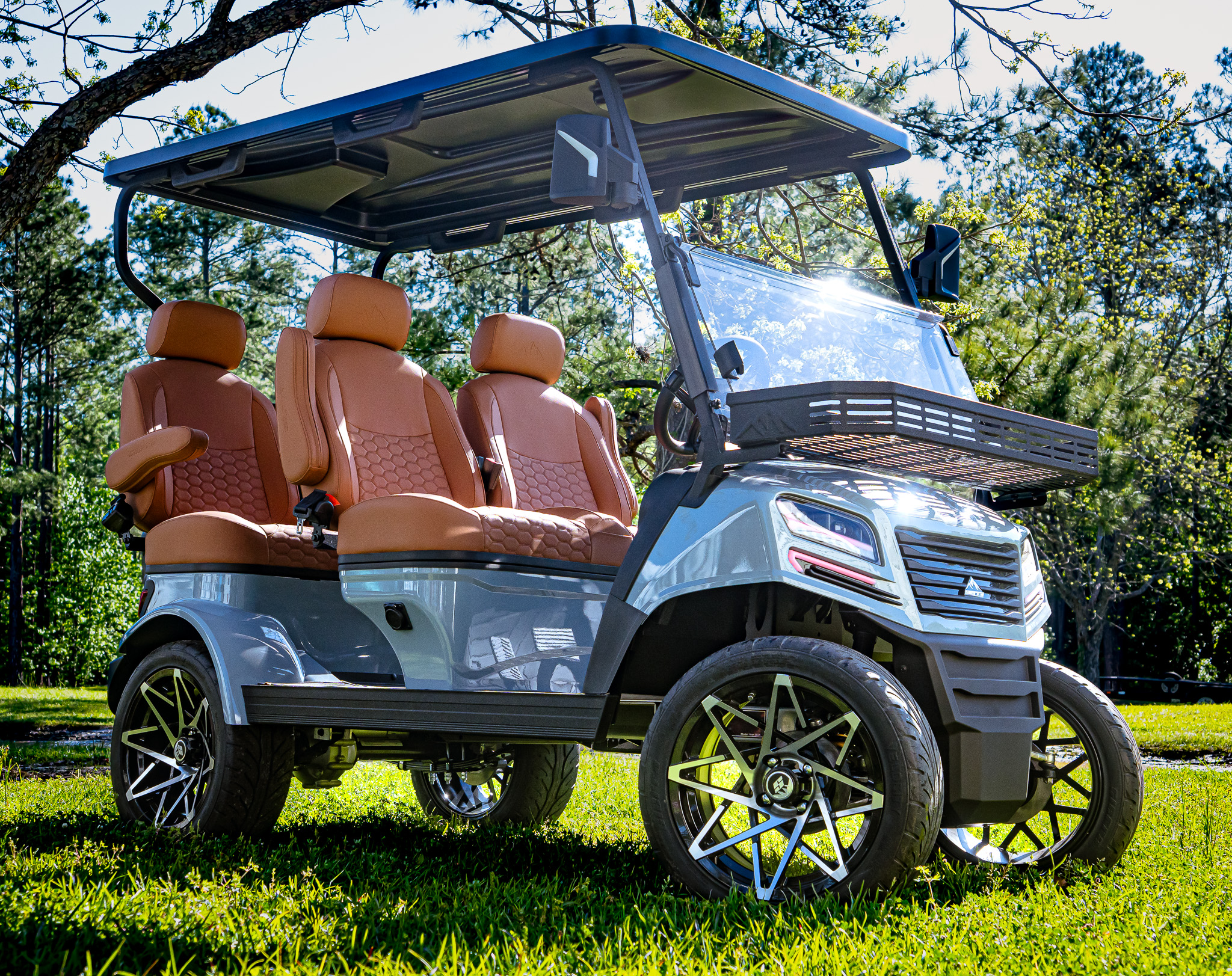
As state and international transport authorities increase oversight on low-speed street driving, basic golf cars are facing restricted access on public roadways. Future-proof procurement requires certified DOT features: AS1/AS2 automotive windshields with wipers, 3-point seat belts certified to FMVSS 209/210, dual automotive side mirrors, high-visibility LED signal lighting, and 17-digit VIN manufacturing records essential for municipal titling and insurance coverage.
3. Modular Multi-Passenger Cabin Configurations
Commercial fleet operators are prioritizing chassis flexibility. Modern Multi Passenger Electric LSV architectures utilize modular rear seat systems that transition from passenger shuttle transport to flip-down utility cargo platforms within seconds. This dual-purpose utility reduces total vehicle fleet sizes for resorts, estate managers, and municipal service departments.
4. Connected Fleet Telematics & Predictive Maintenance
Enterprise buyers managing multi-vehicle deployments are incorporating IoT telemetry. Factory-installed controllers supporting CAN-bus communication enable real-time tracking of battery health, vehicle speed limiting, geofencing enforcement, and automated maintenance alerting—minimizing unexpected fleet downtime.