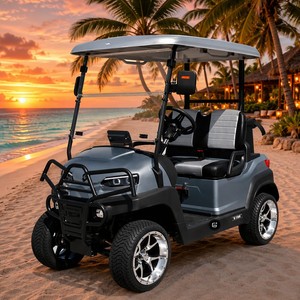
Technical Whitepaper: Next-Generation Cart Electrification & Marine Stereo Integration for Sydney & Global Supply Chains
As micro-mobility, urban low-speed vehicles (LSVs), and commercial electric platform trolleys rapidly displace legacy internal combustion transport across Greater Sydney, the demand for integrated, multi-functional infotainment systems has scaled exponentially. Modern fleet buyers—ranging from sprawling coastal resorts in Port Stephens and the Northern Beaches to high-throughput warehousing operations in Western Sydney—no longer evaluate utility vehicles strictly by payload capacity and voltage efficiency. Today’s commercial operators and lifestyle consumers demand high-fidelity sound, seamless smartphone connectivity, reverse display optics, and automotive-grade dash electronics, all fully integrated into the vehicle's electrical architecture.
This technical whitepaper examines the engineering solutions, electro-acoustic design paradigms, regulatory compliance frameworks, and export dynamics required to manufacture and distribute elite electric carts and custom cart stereo systems out of manufacturing hubs directly into Sydney and the wider Oceania commercial ecosystem.
1. Sydney Market Dynamics: Environmental Challenges & Micro-Mobility Demand
Operating electric carts in Sydney presents a distinct set of environmental and logistical challenges. Greater Sydney’s coastal geography exposes vehicles to elevated atmospheric salt spray, high humidity during summer sub-tropical troughs, and intense ultraviolet radiation (UV Index frequently exceeding 11+). Standard automotive or off-the-shelf car stereos rapidly deteriorate under these conditions: non-treated paper cone speakers disintegrate, non-UV stabilized plastic dashboards yellow and crack, and unsealed wiring harnesses suffer rapid galvanic corrosion.
Furthermore, local NSW Transport regulations and local council guidelines require Low-Speed Vehicles (LSVs) and neighborhood electric vehicles (NEVs) operating within gated estates, golf complexes, and designated road corridors to meet strict Australian Design Rules (ADR) alignment. This includes mandatory safety lighting, acoustic reverse warnings, glass windshields, and 17-digit Vehicle Identification Numbers (VIN).
To address these regional conditions, leading manufacturers and exporters have engineered specialized marine-grade, salt-fog tested audio consoles combined with ruggedized chassis designs. Whether supplying golf courses along the Pacific Highway or industrial facilities near Port Botany, vehicles must feature IP65 to IP67 water ingress protection ratings on all dash-mounted displays, audio head units, and speaker transducer assemblies.
2. Electro-Acoustic Engineering & Power System Integration
Designing a high-output stereo sound system for open-cabin electric carts requires solving complex acoustic and electrical challenges that simply do not exist in traditional enclosed passenger vehicles.
A. Open-Air Acoustic Compensation & Speaker Physics
Enclosed passenger cars benefit from cabin acoustic gain, where bass frequencies are naturally amplified by the enclosed cabin volume. Electric golf carts and platform utility trucks, by contrast, are open-air environments. Sound waves radiate spherically into free space, resulting in severe low-frequency attenuation (bass loss) and significant ambient wind/motor noise interference at speeds above 20 km/h.
To overcome free-space dissipation, our cart audio systems utilize:
- High-Efficiency Class-D Amplification: Operating at over 90% thermal efficiency to deliver high RMS wattage output without overheating or requiring massive aluminum heatsinks.
- Polypropylene Cones with Santoprene Surrounds: Imperial-grade hydrophobic materials that withstand direct rain, hose-downs, and UV degradation.
- Neodymium Magnet Structures: Providing maximum magnetic flux density at half the physical weight of traditional ferrite magnets, preserving vehicle power-to-weight performance ratios.
- Digital Signal Processing (DSP) Equalization: Custom EQ curves pre-tuned to boost clarity in the human vocal range (1 kHz - 4 kHz) while applying dynamic bass limiting to prevent acoustic distortion at peak volumes.
B. High-Voltage Traction Bus Integration & EMI Suppression
Electric carts operate on high-voltage traction packs (typically 48V LiFePO4 or 72V AC motor systems). Injecting an auxiliary 12V audio system into this circuit introduces two significant failure points if engineered improperly:
| Electrical Parameter | Aftermarket / Generic Installation | Sierra / OEM Factory Architecture |
|---|---|---|
| Power Source Connection | Tapped into 1 single 12V lead-acid battery cell | Isolated DC-DC Converter across entire 48V/72V bus |
| Battery Pack Imbalance | Severe (Destroys battery pack life by 40-60%) | Zero Impact (Draws evenly across entire pack) |
| Acoustic Motor Hum (EMI) | High (Unfiltered PWM motor controller whine) | Zero (Toroidal choke filter + optical isolation) |
| Display Touch Screen Optics | Low-brightness LCD (Unreadable in Sydney sun) | 1000+ nits High-Brightness IPS Optically Bonded Panel |
| In-Dash System Optics | Basic FM radio tuner / standard Bluetooth | Touchscreen Infotainment, CarPlay, Backup Camera |
As illustrated in the data matrix above, factory integration relies on heavy-duty, potted DC-DC converters rated for 20A to 30A continuous output. Furthermore, to prevent Electromagnetic Interference (EMI) generated by AC motor controllers (such as Curtis or Toyota-Sevcon controllers) from leaking into the audio signal paths, all audio cabling uses shielded twisted-pair (STP) copper wire with toroidal ferrite core suppression.
3. Comprehensive Product Portfolio Analysis & Sydney Application Scenarios
As a premiere manufacturer and exporter, our product lineup spans from compact human-assisted electric push carts to street-legal 6-seater passenger LSVs equipped with full infotainment consoles. Below is a strategic operational analysis for Sydney buyers:
A. Commercial & Industrial Electric Utility Vehicles (NK Series & Flatbeds)
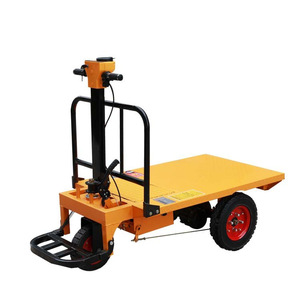
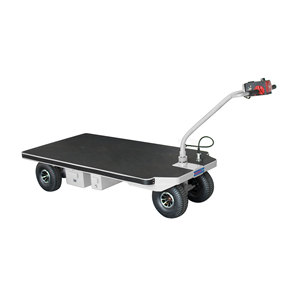
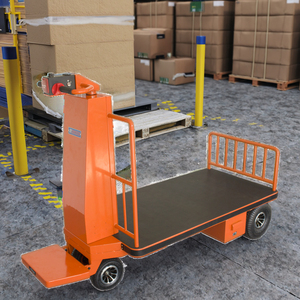
For warehousing hubs in Western Sydney (Wetherill Park, Marsden Park, Erskine Park), manual material transport accounts for substantial physical fatigue and operational downtime. Products like the NK 115 Electric Hand Pull Trolley and the 500KG Nenkeen NK-118 Heavy Duty Stainless Steel Platform Cart deliver immediate labor efficiency gains.
Constructed using 304 marine-grade stainless steel, the NK-118 is uniquely suited for Sydney maritime docks, fish markets, and chemical storage facilities where wash-downs are frequent and atmospheric salt acceleration causes standard carbon-steel trolleys to rust within months.
B. Electric Hand Push Mini Dumpers with Self-Unloading
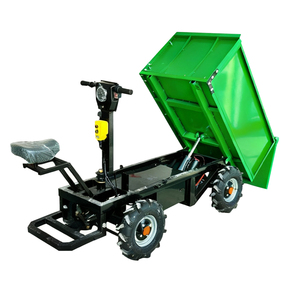
Urban construction sites across the Sydney CBD and Inner West face tight access restrictions where conventional diesel dump trucks cannot operate due to zero-emission indoor mandates, noise curfews, and narrow access pathways. The Electric Hand Push Cart Mini Dumper provides silent, zero-emission maneuverability, allowing workers to push heavy masonry, soil, and concrete aggregate through standard doorway frames, featuring a hydraulic self-unloading bed that eliminates back strain injury risk.
C. Street-Legal Passenger LSVs & Golf Carts with Integrated Stereo Technology
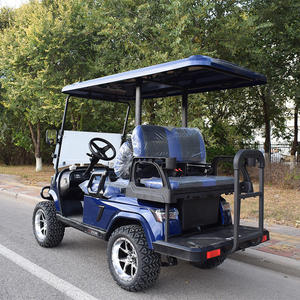
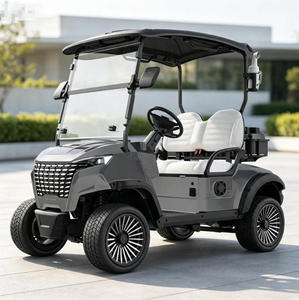
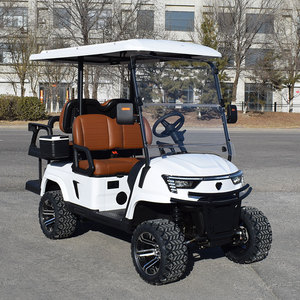
For private residential communities (such as Sanctuary Cove or Hope Island style master-planned developments in NSW/QLD), resort properties, and coastal golf clubs (e.g., Long Reef, St Michael's, Coast Golf Club), vehicle aesthetics and infotainment options dictate buyer preference. The Street Legal 4-Seater Lithium Golf Cart and 3.5kW AC Motor 2-Seater Cart incorporate automotive-grade molded dashboards housing 9-inch to 10.1-inch touchscreens.
These systems integrate rear camera optics—automatically switching the stereo display to a high-definition wide-angle rear camera feed upon selecting reverse gear—enhancing pedestrian safety in busy resort parking lots and crowded golf clubhouse driveways.
4. Localized Sydney Development Trends: The Lithium (LiFePO4) Transition
The Australian electric cart market is undergoing a massive technology migration from traditional flooded lead-acid and AGM batteries to Lithium Iron Phosphate (LiFePO4) chemistry. Sydney commercial buyers are leading this transition due to three key economic factors:
- Total Cost of Ownership (TCO): While lead-acid batteries require replacement every 2-3 years under heavy resort or industrial usage, commercial-grade LiFePO4 battery packs deliver 3,500 to 5,000 deep discharge cycles (8-10+ years of active service life).
- Fast Charging Capability & Opportunity Charging: Lithium battery packs accept high-amperage charging without thermal runaway risk, allowing golf courses or warehouse shifts to "top up" power during 30-minute lunch breaks.
- Mass Reduction & Efficiency: A standard 48V lead-acid battery set weighs approximately 150-180 kg, whereas an equivalent capacity LiFePO4 battery module weighs only 45-55 kg. Removing over 100 kg of dead weight reduces tire wear, minimizes turf compaction on golf greens, increases vehicle acceleration, and extends top speed range by up to 35%.
5. Enterprise OEM/ODM Customization & Global Export Capabilities
As a dedicated manufacturer and international exporter, we maintain comprehensive OEM (Original Equipment Manufacturer) and ODM (Original Design Manufacturer) production capacity. We partner directly with Sydney-based vehicle dealers, corporate fleet operators, and brand owners seeking custom-branded solutions.
Customization capabilities include:
- Custom Dashboard & Audio Tooling: Designing bespoke fiberglass or injection-molded dash panels to house customized screen dimensions, speaker cutouts, marine switches, and branded logo badging.
- Custom Voltage & Audio Power Matching: Integrating high-wattage amplifiers (up to 1000W RMS) with custom lithium battery BMS configurations engineered to handle surge currents without tripping protection circuits.
- Chassis & Suspension Tuning: Lift kit options, heavy-duty leaf springs, hydraulic shock absorbers, and custom powder-coating colors tailored to client corporate identity standards.
- Fleet Management Telematics: Incorporating GPS tracking, remote battery diagnostics, geofencing speed limit controls, and Bluetooth audio broadcast systems for guided tourism shuttles in Sydney national parks and botanical gardens.