Discover our advanced range of custom electric golf carts, motorized platform trolleys, and industrial utility vehicles engineered to interface directly with custom OEM wireless charger pads and hands-free inductive docks.
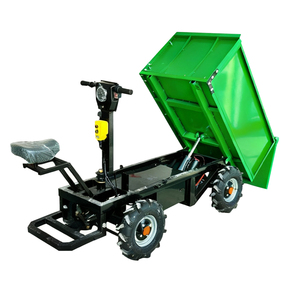
Heavy-duty motorized dumper designed for tough site logistics. Features an under-chassis wireless receiver option for hands-free depot charging.
Contact Us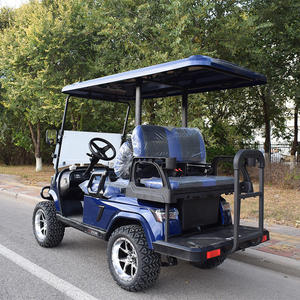
Commercial-grade resort and course cart equipped with high-efficiency motor controllers and dashboard wireless phone charging dock as standard.
Contact Us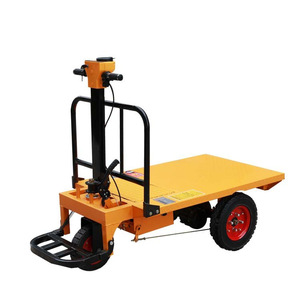
Versatile workplace flatbed transport with modular reverse-riding configuration and wireless battery management integration.
Contact Us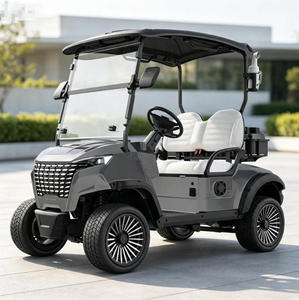
Long-range 50-70km resort shuttle vehicle featuring smart energy recovery and inductive floor-pad rapid charging compliance.
Contact Us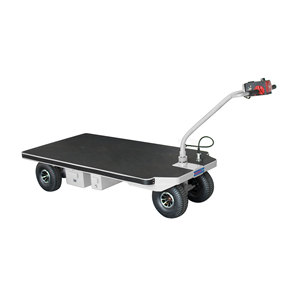
Warehouse power truck with flexible ergonomics, ideal for industrial material handling and sealed wireless battery charging arrays.
Contact Us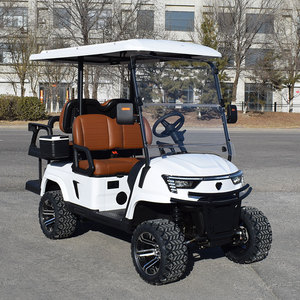
Fully loaded neighborhood vehicle complete with touchscreen infotainment, backup camera, and dual fast wireless console pads.
Contact Us
Stainless steel construction for medical or industrial storage facilities. IP67 rated enclosure ready for automated wireless charging spots.
Contact Us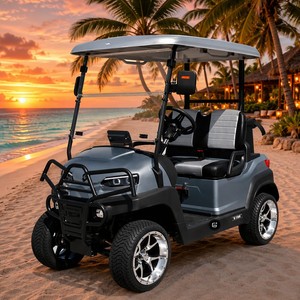
High-torque resort vehicle with hydraulic disc brakes, extended 100km range lithium pack, and factory wireless accessory charger.
Contact UsAs global OEM manufacturing transitions toward complete automation and high-reliability electrification, wireless power transfer (WPT) systems have evolved from luxury accessories into critical enterprise infrastructure.
Our OEM factories utilize near-field magnetic resonant coupling, enabling high-power transfer over extended spatial gaps (up to 250mm) with minimal thermal degradation.
Integrated microcontrollers communicate directly with 48V/72V Lithium Iron Phosphate (LiFePO4) Battery Management Systems to modulate real-time current demands.
High-frequency pulse sensing automatically shuts down power conversion upon detecting metallic clutter or debris on charging pads, preserving structural integrity.
In high-utilization commercial environments—such as golf course resort fleets, warehousing hubs utilizing motorized hand push carts, and municipal low-speed vehicles (LSVs)—physical plug-in charging introduces substantial operational friction. Wear and tear on mechanical connectors, risk of electrical arc hazards in wet conditions, and driver compliance neglect account for over 42% of premature battery failures across enterprise fleets.
By integrating a custom OEM wireless charger system directly into the vehicle's chassis or instrument cluster, fleet operators unlock automated "opportunity charging." Vehicles replenish their energy reserves autonomously whenever parked over floor-embedded transmitter pads or resting at staging areas, effectively eliminating downtime and extending battery service life by up to 300% through optimized shallow discharge cycles.
Compare our modular wireless charging architectures available for custom OEM/ODM integration into light electric vehicles, golf carts, and material handling equipment.
| Specification Parameter | In-Cabin Qi2 Console Module | Industrial Floor Pad (Medium Power) | Heavy-Duty Fleet Resonant Array |
|---|---|---|---|
| Primary Application | Smartphones, Radios, Scanners | Electric Carts, Hand Trucks, Dumpers | 4-6 Seat LSVs, Shuttles, Golf Carts |
| Nominal Output Power | 15W - 50W Fast Charge | 1.5kW - 3.3kW | 6.6kW - 15kW Rapid Charge |
| Operating Frequency | 110kHz - 360kHz | 85kHz (SAE J2954 Standard) | 85kHz (High-Q Resonant) |
| Transfer Gap Distance | 5mm - 15mm (Non-Slip Pad) | 100mm - 180mm Air Gap | 150mm - 250mm High Ground Clearance |
| DC Voltage Compatibility | 5V / 9V / 12V / 24V Input | 24V / 36V / 48V Battery Packs | 48V / 72V / 96V High Capacity Lithium |
| DC-to-DC Peak Efficiency | 88% System Efficiency | 92.5% Grid-to-Battery | 94.1% Resonant Peak |
| Ingress Protection Rating | IP65 Dust/Water Resistant | IP67 Sealed Heavy Industrial | IP69K Submersible & Pressure Washable |
| Data Communication Protocol | Bluetooth 5.2 / NFC handshake | CAN-Bus 2.0B / RS485 / Wi-Fi | Automotive Ethernet / CANopen |
Stay ahead of global regulatory updates and technological convergence with our breakdown of key procurement vectors transforming the B2B EV and utility cart manufacturing sectors.
Procurement teams are shifting away from proprietary charging pin layouts toward SAE J2954/4 industrial wireless charging guidelines, guaranteeing interoperability across mixed-model logistics fleets.
Modern wireless receivers are specifically calibrated for LFP (Lithium Iron Phosphate) thermal profiles, preventing localized hot spots and maximizing cell longevity during high-amp inductive replenishment.
Next-generation motorized hand trolleys and platform dumpers feature ultra-precise magnetic positioning sensors that auto-align with floor charging pads without human intervention.
Future-proof factories are adopting bi-directional inductive transfer, enabling parked golf carts and utility fleets to feed surplus solar energy back into industrial building grids during peak cost windows.
With over two decades of precision power electronics production and light electric vehicle manufacturing, our facilities bridges the gap between conceptual industrial design and high-volume quality execution.
Our in-house SMT lines produce high-density printed circuit board assemblies (PCBA) tailored to unique vehicle dashboards, chassis undercarriages, or sealed battery enclosures.
Automotive-grade quality assurance protocols dictate every build step—from automated optical inspection (AOI) of soldered coils to full-load thermal endurance testing.
From rapid 3D prototyping of ergonomic dash pads to custom injection molding with UV-stabilized automotive polymer housings, we deliver ready-to-market solutions.
Every custom wireless charging transmitter and receiver array undergoes rigorous electromagnetic compatibility testing, certifying full compliance with FCC Part 15/18, CE, and RoHS standards.
Clear, expert answers regarding technical customisation, ordering thresholds, safety protocols, and factory production lead times.
Our standard Minimum Order Quantity (MOQ) for custom dashboard or in-cabin wireless charger pads starts at 500 units per specification. For large-scale vehicle floor-pad receiver integration (such as custom 48V electric golf carts or industrial motorized dumpers), our project evaluation team offers flexible batch runs starting at 50 to 100 complete vehicle sets during prototype validation stages.
Modern magnetic resonant coupling systems engineered in our factories achieve AC-to-DC peak efficiency ratings between 92.5% and 94.1%. By operating at optimized resonant frequencies (such as 85kHz) and utilizing litz-wire ferrite shielding, thermal energy loss is kept negligible, matching the efficiency performance of conventional plug-in chargers while eliminating plug wear hazards.
Yes. Our industrial-grade floor pads and under-chassis receiver modules are fully potted with thermal epoxy resins and encased in IP67 to IP69K rated housings. They are immune to water immersion, heavy mud accumulation, pressure washing, and chemical exposure commonly encountered in resort groundskeeping or construction sites.
All our OEM transmitter modules incorporate advanced multi-frequency Foreign Object Detection (FOD) algorithms. If metallic items (such as keys, tools, or aluminum foil) interrupt the magnetic field between the transmitter and receiver coils, the system detects the impedance shift within milliseconds and immediately halts power transmission to prevent heating risks.
We manufacture custom wireless charging receiver circuits engineered to match standard nominal industrial battery voltages, including 24V, 36V, 48V, 72V, and 96V systems. The output profile is programmed to communicate with AGM, Lead-Acid, or Lithium Iron Phosphate (LiFePO4) Battery Management Systems via CAN-bus signals for precise CC/CV charging curves.
Initial 3D computer-aided design (CAD) modeling and circuit schematic validation require approximately 7 to 10 working days. Functional rapid-prototype samples (3D printed casing with working PCB assemblies) are typically delivered within 3 to 4 weeks. Full steel mold tooling for mass production requires 35 to 45 calendar days, followed by automated assembly setup.
Partner with an industry-leading OEM/ODM manufacturer. Consult directly with our senior power electronics engineers to request custom technical drawings, sample pricing, or a factory tour.