Custom OEM Cart Charger Manufacturer & Factories

Next-Generation Industrial & Commercial Fleet Charging Systems: Engineering Excellence, Multi-Chemistry Adaptability, and OEM/ODM Global Scale

Featured OEM/ODM Electric Carts & Systems

Fleet Vehicle Infrastructure & Compatible Charging Platforms

Explore our factory-engineered commercial electric carts, heavy-duty utility movers, and resort shuttles equipped with integrated, intelligent OEM battery charging solutions.
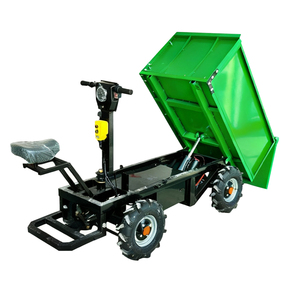
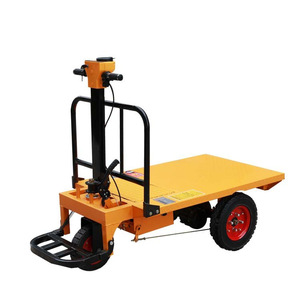
Electric Hand Push Cart Electric Trolleys Electric Mini Dumper with Self Unloading System

Electric Hand Push Cart Electric Trolleys Electric Mini Dumper with Self Unloading System

Send an Inquiry
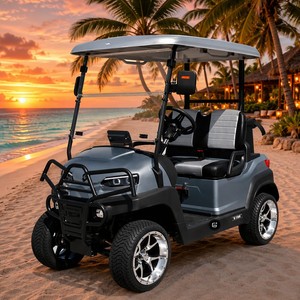
Professional Grade Powerful Efficient Versatile Reliable Sturdy Style Electric Golf Cart

Professional Grade Powerful Efficient Versatile Reliable Sturdy Style Electric Golf Cart

Send an Inquiry
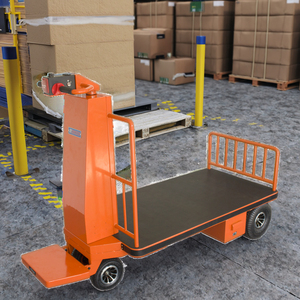
Customized Factory Electric Four-Wheel Flatbed Electric Cart Reverse Riding Donkey Design for Hand Carts Trolleys

Customized Factory Electric Four-Wheel Flatbed Electric Cart Reverse Riding Donkey Design

Send an Inquiry
GreenRider Warehouse Transport Electric Cart Resort Sightseeing Vehicle Low Speed Electric Shuttle Golf Cart 48V Battery 50-70km

GreenRider Warehouse Transport Electric Cart Resort Sightseeing Shuttle 48V Battery

Send an Inquiry
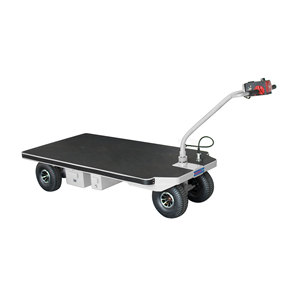
NK 115 Electric Hand Pull Trolley With Flexible Handle Power Electric Platform Cart Warehouse Hand Truck

NK 115 Electric Hand Pull Trolley With Flexible Handle Power Electric Platform Cart

Send an Inquiry
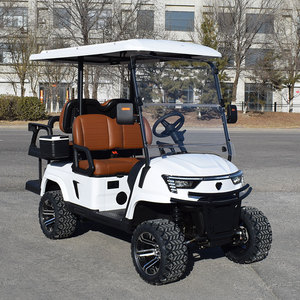
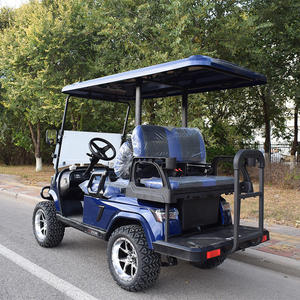
Wholesale Factory Supply New Design 48V 72V Ac Motor Street Legal 4 Seater Lithium Golf Electric Cart

Wholesale Factory Supply 48V 72V AC Motor Street Legal 4 Seater Lithium Golf Electric Cart

Send an Inquiry
500KG Nenkeen NK-118 Heavy Duty Four-Wheel Stainless Steel Platform Motorized Electric Flat Cart Trolley OEM Storage

500KG Nenkeen NK-118 Heavy Duty Four-Wheel Stainless Steel Motorized Platform Flat Cart

Send an Inquiry
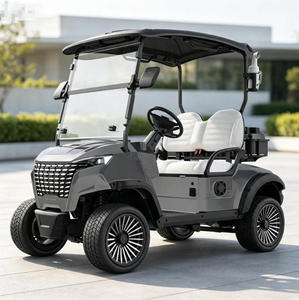
3.5kW AC Motor Electric Golf Cart 2 Seat 80-100km Range Front Disc Rear Drum Brake Resort Course Use

3.5kW AC Motor Electric Golf Cart 2 Seat 80-100km Range Front Disc Rear Drum Brake

Send an Inquiry
96.5%
Peak Power Conversion Efficiency
IP67
Waterproof & Dustproof Rating
50,000+
Hours Mean Time Between Failures
< 0.5%
RMA Warranty Defect Rate

The Paradigm Shift in Commercial Cart Electrification & Battery Charging Infrastructure

The global commercial electric cart market—spanning low-speed neighborhood vehicles (LSVs), warehouse material handling platform trucks, resort shuttle buses, and motorized hand dumpers—is undergoing an unprecedented technological transformation. As fleet operators transition rapidly from traditional flooded lead-acid batteries to high-energy-density Lithium Iron Phosphate (LiFePO4) and advanced Lithium-ion chemistries, the demand for custom OEM cart charger manufacturing has shifted from simple voltage supply to high-precision, intelligent energy management systems.

Modern commercial carts require chargers engineered to withstand demanding operational duty cycles, thermal stress, vibration, and harsh outdoor ambient conditions. As a premier original equipment manufacturer (OEM) and custom factory supplier, our engineering operations combine deep expertise in power electronics topology with custom firmware algorithms. This whitepaper analyzes global procurement trends, technical engineering standards, safety certifications, and total cost of ownership (TCO) optimization for B2B fleet buyers, OEM cart assemblers, and global distributors.

Adaptive Multi-Stage Charging

Dynamic micro-controller units (MCU) automatically adjust Constant Current (CC), Constant Voltage (CV), and Float/Trickle phases based on real-time cell voltage and ambient temperature feedback.

Ruggedized IP67 Enclosures

Die-cast aluminum alloy casings filled with thermal-conductive resin potting guarantee full protection against water immersion, salt spray corrosion, dust, and severe mechanical vibration.

CAN-Bus Telemetry & Smart BMS

Seamless communication via standard CANopen or standard J1939 protocols allows high-speed handshake with Battery Management Systems (BMS) for enhanced thermal safety and cell balancing.

B2B Procurement Trends: What OEM Buyers Must Evaluate (2025–2030)

As electric fleet management shifts toward real-time telemetry, automated diagnostic logging, and ultra-fast turnaround times, commercial cart manufacturers must align their component procurement with five major industry macro-trends:

  1. Universal AC Input & Global Compliance: Modern OEM cart chargers must operate flawlessly across wide AC input voltage ranges (90V–264V AC, 45Hz–65Hz) to streamline global inventory management and prevent burnout from unstable local power grids.
  2. Gallium Nitride (GaN) & Silicon Carbide (SiC) Power Switching: High-frequency power conversion topologies utilizing GaN and SiC semiconductors allow chargers to reduce physical footprint by up to 40% while raising efficiency past 96%, dramatically lowering operational thermal dissipation.
  3. Dual On-Board & Off-Board Architectural Versatility: Enterprise buyers require modular mechanical designs that can be mounted directly inside chassis spaces (on-board with vibration dampers) or deployed as standalone bench top units with heavy-duty ergonomic handles.
  4. Custom Firmware & OTA Updates: Field-upgradable MCU software allows fleet operators to reflash charging profile parameters (e.g., modifying peak voltage curves when swapping lead-acid packs for LiFePO4 batteries) without replacing physical hardware.
  5. Zero-Downtime Reliability Standards: Industrial utility carts operating in 24/7 manufacturing plants require MTBF specifications exceeding 50,000 continuous hours, backed by rigorous factory burn-in testing protocols.
Technical Comparison Matrix

Factory OEM Chargers vs. Commodity Aftermarket Chargers

Engineering Criteria Factory Custom OEM Cart Chargers Standard Aftermarket Chargers
Power Efficiency 95.0% – 96.8% (APFC active factor >0.99) 82.0% – 87.0% (Passive PFC or none)
Ingress Protection IP67 Fully Sealed & Fully Potted Resin IP21 or IP54 Fan-cooled (Dust/Water vulnerable)
Battery Chemistry Support Custom firmware curves for LiFePO4, NMC, AGM, GEL, Flooded Fixed single profile, non-configurable
Communication Interface Isolated CAN 2.0B, CANopen, RS485, Custom Telemetry None (Analog voltage detection only)
Protection Protocols Over-temp, Over-voltage, Over-current, Reverse polarity, Short-circuit, Auto-thermal derating Basic glass fuse or single thermal cutoff switch
Operating Ambient Temp -40°C to +65°C full load operation -10°C to +40°C (Dramatically reduced life in heat)
Global Certifications UL2202, UL1564, CE, FCC Part 15, CEC, RoHS, REACH compliant Uncertified or non-verifiable basic marks

Custom Factory Engineering & OEM/ODM Manufacturing Capabilities

As a vertically integrated cart charger manufacturer, our production facility houses automated Surface Mount Technology (SMT) lines, high-precision transformer winding machinery, and comprehensive environmental testing laboratories. We partner directly with cart original equipment manufacturers (OEMs), brand owners, and fleet solution providers to deliver end-to-end custom engineering:

1. Electrical & Firmware Tailoring

We program customized multi-stage charging algorithms precise to your specific battery manufacturer's parameters, preventing premature plate sulfation in lead-acid batteries or thermal runaway in high-voltage lithium battery banks (24V, 36V, 48V, 72V, 96V systems).

2. Mechanical & Thermal Enclosure OEM

Choose from custom extruded aluminum housings, custom mounting brackets engineered specifically for tight utility cart under-seat compartments, custom powder-coat brand color finishes, and laser-engraved enterprise logos.

3. Wiring Harness & Connector Integration

We assemble customized input/output cables equipped with heavy-duty Anderson Powerpole connectors, REMA industrial plugs, standard SAE J1772 charge inlets, or custom waterproof quick-disconnect harnesses matching your cart wiring loom.

Our quality assurance protocol includes 100% full-load automated 4-hour thermal burn-in testing, high-voltage insulation withstand checks, vibration resistance verification, and automated optical inspection (AOI) on all PCB assemblies prior to final packaging and dispatch.

Knowledge Base & FAQ

Frequently Asked Procurement & Technical Questions

In-depth technical answers curated by our senior power electronics engineering team.

How do custom OEM charging curves maximize LiFePO4 and Lead-Acid battery lifespan?
Custom OEM charging curves tailor voltage thresholds, current limits, and stage transition triggers to the exact internal resistance and chemical characteristics of your battery pack. For Lithium Iron Phosphate (LiFePO4) packs, the charger manages pre-charge, constant current fast charging, constant voltage balancing, and automatic shut-off to eliminate voltage stress on individual BMS cells. For lead-acid (AGM/GEL/Flooded), custom multi-phase algorithms deliver controlled de-sulfation pulses and temperature-compensated float voltages, expanding battery cycle life by up to 35% compared to generic off-the-shelf chargers.
What IP protection and structural standards are required for industrial trolley and golf cart application?
For vehicles operating in outdoor environments—such as motorized hand dumpers, resort golf carts, and agricultural platform trucks—an IP67 rating is essential. This means the charger is 100% protected against dust entry and can withstand temporary immersion in water up to 1 meter deep. Mechanically, chargers must feature internal silicon resin potting to absorb high structural vibration (compliant with US Military Standard MIL-STD-810G), preventing solder joint fatigue and component detachment during operation on rough terrain.
Can your manufacturing factory integrate CAN-bus (CANopen / J1939) protocols into our vehicle BMS?
Yes. Our engineering division specializes in custom CAN-bus integration. We can implement standard CANopen, SAE J1939, or proprietary customer-defined CAN message structures. This enables real-time communication between the charger and the vehicle's Battery Management System (BMS) or central vehicle control unit (VCU). The BMS can dynamically request target charging current, read diagnostic temperature codes, enforce thermal safety derating, and report State-of-Charge (SoC) data directly to telemetry cloud dashboards.
What is the lead time, MOQ, and sample validation workflow for custom OEM charger development?
For custom engineering projects, functional prototypes (with customized cables, casing, and programmed firmware curves) are typically completed within 14 to 21 business days. Upon customer sample testing and validation approval, mass production lead times range between 25 to 35 days depending on batch volume. Minimum Order Quantities (MOQs) for fully customized OEM projects start at 100 units, with flexible scaling options for established fleet manufacturers and regional distributors.
How do OEM cart chargers maintain energy compliance and safety certifications globally?
Our chargers are manufactured under strict ISO 9001:2015 quality control management systems. Each unit is designed from the PCB level to meet major global regulatory standards, including UL2202 (Electric Vehicle Charging System Equipment), UL1564 (Industrial Battery Chargers), CE mark (LVD/EMC directives), FCC Part 15 Class B electromagnetic compatibility, and California Energy Commission (CEC) efficiency mandates. Certifications and test reports are provided directly to OEM partners for seamless vehicle homologation.

Partner with a Leading Custom OEM Cart Charger Manufacturer

Elevate your electric fleet performance, ensure maximum battery longevity, and optimize supply chain costs with factory-direct engineering, robust IP67 hardware, and custom CAN-bus solutions.