Self-Unloading
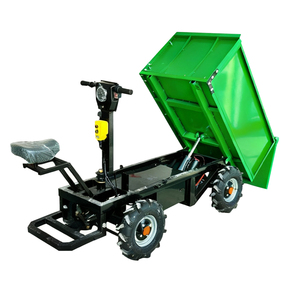
Electric Hand Push Cart & Mini Dumper with Self Unloading
- Power: High-Torque Brushless DC Motor
- Payload: Heavy-Duty Hydraulic Hydraulic Lift
- Chassis: Reinforced Anti-Corrosion Steel
Explore China's top OEM factory-direct solar and electric vehicle series engineered for extreme durability, long autonomy, and low total cost of ownership.
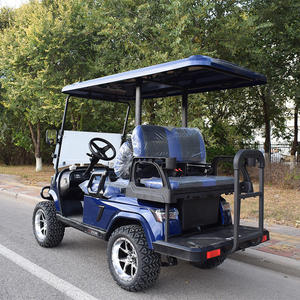
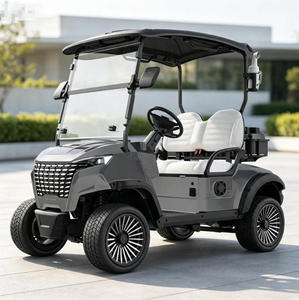
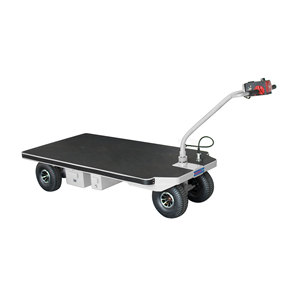
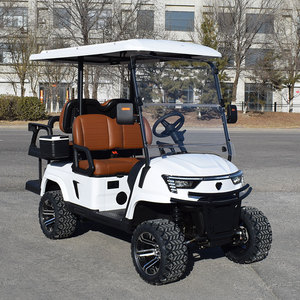
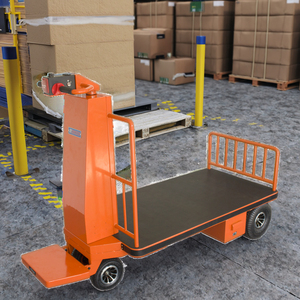
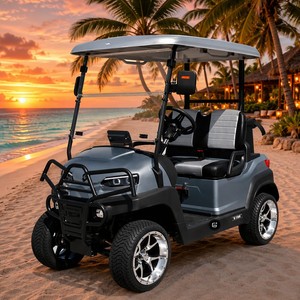
Quantitative performance indicators validating Chinese solar cart manufacturing leadership in global low-speed vehicle (LSV) markets.
An in-depth technical breakdown of photovoltaic technology, power electronics, and chassis structural integrity from China's leading manufacturing hubs.
Modern Chinese solar cart factories leverage high-efficiency Monocrystalline PERC (Passivated Emitter and Rear Cell) technology directly molded into canopy roofs. Operating at silicon-cell efficiencies exceeding 23.5%, these panels are paired with flexible ETFE encapsulation, offering extreme impact resistance against hail, thermal shock, and UV degradation while producing up to 350W of continuous power generation under ambient sunlight.
Maximum Power Point Tracking (MPPT) charge controllers act as the central nervous system of modern solar utility carts. Utilizing dynamic perturb-and-observe algorithms, China's top manufacturers optimize solar voltage output to precisely match 48V and 72V LiFePO4 battery pack architecture. This ensures active trickle charging even under partial shade or low irradiance conditions, extending battery lifespans by up to 30%.
Engineered for rigorous commercial, resort, and industrial applications, modern solar carts utilize high-tensile hot-dip galvanized steel frames subjected to robotic laser welding and cathodic electrophoretic dip coating. This anti-corrosion barrier protects structural integrity across coastal resorts, humid agricultural landscapes, and high-salinity maritime logistics centers.
Evaluating long-term economic returns, maintenance overhead, and operational energy efficiency for global fleet operators and distributors.
| Technical & Operational Metrics | Standard Lead-Acid Cart | Standard Lithium (LiFePO4) Cart | Integrated Solar Lithium Cart |
|---|---|---|---|
| Daily Operating Autonomy | 35 - 45 km | 60 - 80 km | 90 - 120 km (Continuous Solar Trickle) |
| Battery Lifespan Cycles | 500 - 800 Cycles | 2,500 - 3,000 Cycles | 3,500+ Cycles (Reduced DOD stress) |
| Grid Electricity Dependency | 100% Grid Dependent | 100% Grid Dependent | 35% - 50% Solar Self-Powered |
| Roof Canopy Functionality | Passive Plastic Roof | Passive Plastic Roof | Active Monocrystalline Solar Collector |
| Estimated 5-Year Fleet TCO Savings | Baseline Cost | 22% Maintenance Reduction | 48% Total Cost of Ownership Savings |
| Regulatory & Street Legal Readiness | Limited Road Use | Optional LSV Package | Full DOT / CE / EEC LSV Compliance |
Key technological shifts driving global procurement strategies for resorts, municipal fleets, golf courses, and industrial complexes over the next decade.
The next generation of solar cart production in China is transitioning toward bifacial glass-glass photovoltaic canopies. By absorbing direct sunlight from above and ambient reflected light (albedo effect) from pavement, grass, or gravel underneath, power generation yields increase by an additional 15-20%, making off-grid utility operations highly feasible.
Global fleet managers now demand real-time diagnostics. Advanced Chinese factories integrate 4G/CAN-BUS IoT modules into solar carts, allowing operators to monitor battery state of charge (SoC), real-time solar wattage input, GPS tracking, remote diagnostics, and predictive battery maintenance directly via mobile app or cloud dashboards.
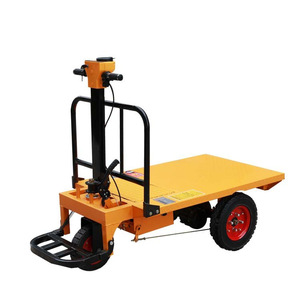
To reduce shipping costs and expand versatility, Chinese manufacturers are standardizing modular lightweight aluminum alloy chassis designs. Procurement buyers can rapidly transform a single core vehicle platform from a 4-passenger resort shuttle into a 500KG capacity flatbed utility cart or an enclosed cargo box trolley using factory quick-release mounting hardware.
As commercial electric vehicle power demands rise, Chinese OEM manufacturers are preparing chassis configurations for high-voltage (72V/96V) architectures and solid-state lithium chemistry. This advancement promises zero thermal runaway risks, double the power density, and ultra-fast charging capability complementary to solar harvesting.
Why leading global brands, commercial enterprises, and distributors source solar carts directly from our advanced Chinese production lines.
From frame stamping, robotic welding, and automated powder coating to custom harness assembly, battery pack building, and final solar calibration—our state-of-the-art facilities ensure total quality control and competitive factory-direct pricing without intermediary markups.
Every vehicle leaving our production line undergoes rigorous testing under ISO9001 management systems. Our solar carts adhere strictly to global regulatory frameworks, including CE mark compliance, DOT (US Department of Transportation) Low-Speed Vehicle certification, and EEC/CoC registration standards for European street legality.
We empower international distributors with comprehensive customization solutions—including brand logos, custom body paint matching, specialized cargo box designs, solar panel capacity scaling, custom speed governor programming, and bespoke luxury interior seating options.
Expert insights addressing key technical, logistical, regulatory, and commercial queries for international solar cart buyers and fleet importers.
Solar carts utilize multi-crystalline or monocrystalline PERC solar panels equipped with smart MPPT (Maximum Power Point Tracking) controllers. MPPT technology dynamically extracts maximum available voltage even under low light, diffuse daylight, or partial shade conditions. While solar generation peaks under direct sunlight (yielding up to 45% range extension), the vehicle continues to operate seamlessly on its primary Lithium Iron Phosphate (LiFePO4) battery pack when solar irradiance is reduced.
Commercial operators, resorts, and industrial facilities typically realize a full Return on Investment within 2.5 to 3.5 years. Financial savings stem from three primary factors: reduced grid power consumption (up to 50% energy savings via solar trickle charging), extended battery lifespan by preventing deep discharge cycles, and minimal maintenance overhead compared to gas-powered or lead-acid fleets.
Yes. Our factory offers low-speed vehicle (LSV) compliance packages tailored to regional market standards. Vehicles can be equipped with 17-digit VINs (Vehicle Identification Numbers), DOT-approved safety glass windshields, LED headlights, turn signals, rear-view mirrors, 3-point seat belts, hydraulic disc brakes, and maximum speed governors set to 20-25 mph (32-40 km/h) as required by local road authorities.
We provide end-to-end OEM and ODM services for volume procurement. Customization possibilities include vehicle color matching (RAL code pantones), custom brand screen printing, lithium battery capacity sizing (48V 100Ah up to 72V 205Ah), solar canopy wattage upgrades, touchscreen infotainment system integration, reverse cameras, custom cargo bed dimensions, and specialized heavy-duty hydraulic tipping systems.
Our solar canopies are manufactured using shatterproof ETFE polymer lamination or toughened glass-glass photovoltaic modules embedded directly within a structural aluminum housing. This design provides high resistance against physical impact from falling debris, hail, thermal expansion, and intense weather conditions, backed by a 10-year factory solar module warranty.
Standard manufacturing lead time for wholesale orders ranges from 15 to 25 days depending on customization complexity. Vehicles are packed using SKD (Semi-Knocked Down) steel crates or CKD (Completely Knocked Down) containers to maximize shipping space in 20ft and 40ft High Cube containers. Full technical assembly manuals and video guidelines are provided for rapid local deployment.
Upgrade your fleet or distribution portfolio with high-efficiency, factory-direct solar utility vehicles. Contact our engineering team today for technical catalogs, bulk pricing, and custom OEM specifications.