Engineered for heavy-duty material handling, commercial resort transport, and street-legal low speed vehicles (LSVs). Fully customizable with integrated CAN-bus vector motor controllers.
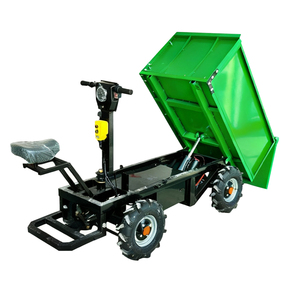
High-torque motorized push cart equipped with ergonomic throttle control, anti-rollback hydraulic braking, and self-unloading tipping mechanism.
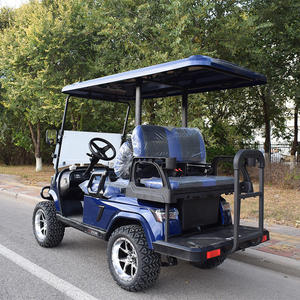
Heavy-duty aluminum chassis platform integrated with smart AC vector motor drive, regenerative braking, and automotive-grade suspension design.
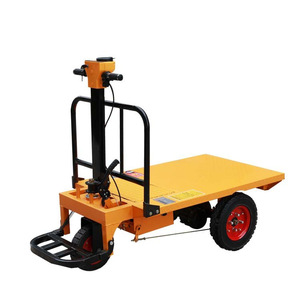
Specialized industrial flatbed vehicle for factory logistics, featuring dual-direction control modules and high-payload steel frame construction.
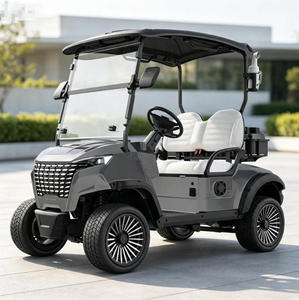
Low-speed electric shuttle providing 50-70km range per charge. Optimized for resort guest transit, campus security, and indoor warehouse duty.
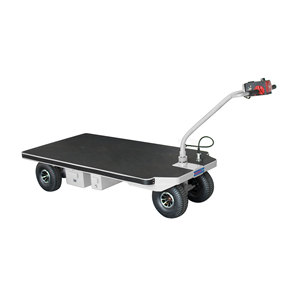
Compact platform hand truck designed for tight warehouse aisles and commercial logistics. Includes programmable speed limiting controller.
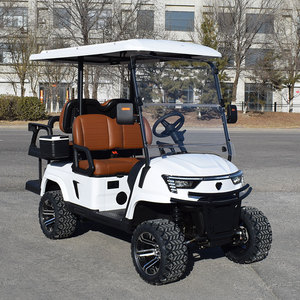
Fully loaded neighborhood low speed vehicle (LSV) equipped with touchscreen display, backup camera, lockable dash, and street-legal lighting package.
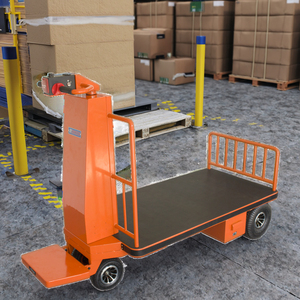
Heavy-duty 500kg payload stainless steel electric flat trolley. Built for demanding cleanroom, food processing, and heavy industrial storage operations.
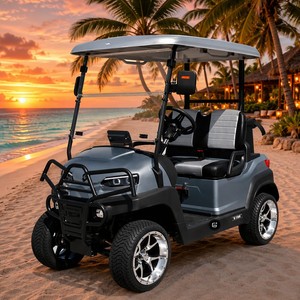
High-efficiency 2-passenger golf course vehicle returning 80-100km range per charge. Fitted with hydraulic front disc brakes and premium digital dash.
The global transition toward electrified micro-mobility, industrial material handling, and Low-Speed Vehicles (LSVs) has placed motor controllers at the center of power electronic engineering. As a core link between the energy storage unit (Lithium-ion / LiFePO4 / AGM Lead-Acid) and the electric traction motor (AC Induction or Permanent Magnet Synchronous Motor - PMSM), the motor controller determines total system efficiency, thermal longevity, operational safety, and electromagnetic compatibility.
For international buyers, distributors, and Original Equipment Manufacturers (OEMs), sourcing from CE-certified cart controller factories is not merely a legal prerequisite for entering the European Economic Area (EEA)—it is a fundamental assurance of functional safety and electrical robustness under rigorous operational stresses.
Motor controllers engineered for industrial trucks and electric mini dumpers adhere to EN 1175 safety standards, incorporating dual-microprocessor architecture for real-time fault detection and ISO 13849 Performance Level d (PLd) functional safety.
Advanced sinusoidal FOC algorithms dynamically adjust phase current vectors based on rotor position telemetry. This yields whisper-quiet motor operation, smoother acceleration curves, and up to 15% extended battery range compared to legacy trapezoidal controllers.
Factories utilize multi-layer PCB shielding, ferrite suppression cores, and aluminum die-cast heat sinks to ensure compliance with CISPR 25 radiated emissions, eliminating interference with on-board touchscreens, wireless chargers, and telematics units.
Whether deployed in coastal resort golf carts subject to salt spray or heavy-duty 500KG industrial flatbed trolleys operating in humid manufacturing facilities, cart controllers require robust environmental protection. Leading export manufacturing facilities utilize automated liquid potting resin injection paired with high-durability thermal pad interfaces. This guarantees an IP67 water and dust ingress rating while maintaining a low thermal resistance channel from MOSFET junctions to the aluminum chassis exterior.
Our manufacturing matrix consolidates decades of engineering expertise across commercial low-speed vehicles (such as the Sierra LSV 2026 AX Series) and heavy-duty industrial handling systems (including the Nenkeen NK-115 & NK-118 platform series and GreenRider shuttles). Rather than assembling off-the-shelf components, our factories design integrated powertrain ecosystems where the controller, instrument cluster, battery management system (BMS), and vehicle control unit (VCU) communicate seamlessly over CAN-bus (Controller Area Network) protocols.
The modern electric cart buyer demands more than basic transportation. Taking inspiration from the Sierra LSV manufacturing philosophy, our street-legal 4-seater and 6-seater golf cart lines incorporate high-value standard equipment that is engineered into the main wiring harness at the factory level:
Sustaining global exporter status demands unyielding quality control. Our manufacturing partners operate ISO 9001:2015-certified facilities featuring automated surface mount technology (SMT) assembly, 3D automated optical inspection (AOI), X-ray component verification, and end-of-line (EOL) dynamic burn-in testing. Every controller produced undergoes 100% full-load thermal cycle testing prior to vehicle integration or bulk packaging.
Selecting the appropriate controller architecture depends on payload demands, speed requirements, and environmental conditions. The table below outlines the core engineering parameters across our primary product categories:
| Vehicle Class / Product | Nominal Voltage | Motor Drive Type | Peak Controller Amperage | IP Ingress Protection | Primary Target Application |
|---|---|---|---|---|---|
| Electric Hand Push Mini Dumper | 24V / 36V DC | Brushed / Brushless DC | 110A - 150A | IP65 Sealed | Construction site dumpers, agricultural earth moving |
| Nenkeen NK-115 & NK-118 Trolley | 36V / 48V DC | PMDC / BLDC Vector | 150A - 200A | IP66 Enclosed | 500KG heavy logistics, warehouse order picking |
| GreenRider 50-70km Shuttle | 48V AC | AC Induction Drive | 275A - 350A | IP67 Sealed | Resort passenger shuttles, campus transport |
| Professional 3.5kW Golf Cart | 48V AC | AC Sinusoidal Vector | 350A Peak | IP67 Die-Cast | Golf course rental fleets, private resort mobility |
| Sierra LSV 4-Seater / 6-Seater | 48V / 72V AC / PMSM | CAN-Bus PMSM Vector | 400A - 500A Peak | IP67 Automotive | Street-legal neighborhood driving, gated communities |
As fleet managers, OEM vehicle builders, and commercial distributors plan their procurement strategies for the 2026–2030 horizon, four major technological shifts are redefining the market for electric cart controllers and low-speed transport systems:
While 48V systems remain the industry standard for traditional golf carts, commercial applications are rapidly adopting 72V and 96V LiFePO4 battery platforms. Higher voltage reduces phase currents for the same power output, minimizing copper losses, decreasing wiring harness weight, and dramatically reducing heat generation during prolonged slope climbing.
Modern export-grade controllers are integrated with 4G/5G telematics hardware modules. Fleet managers can monitor real-time battery health, track vehicle location via GPS, enforce geofencing speed limits, and execute over-the-air (OTA) firmware updates without returning carts to service bays.
Proprietary controller communications are quickly being phased out in favor of open CANopen and SAE J1939 protocols. This standard allows OEM cart manufacturers to freely pair our CE-certified controllers with third-party digital dashboards, BMS units, and hydraulic auxiliary pumps without custom software lock-in.
Global procurement teams prioritize suppliers offering modular platforms. By utilizing standardized controller mounting dimensions and plug-and-play wiring looms, factory lines can easily transition between 2-seat utility carts, 500KG flatbeds, and 6-seat resort shuttles on a single assembly floor.
Key technical, regulatory, and trade insights compiled by our engineering and export team to assist global purchasing directors:
Our cart controllers comply with the EU Electromagnetic Compatibility (EMC) Directive 2014/30/EU (EN 61000-6-2 / EN 61000-6-4) and the Low Voltage Directive 2014/35/EU. For controllers integrated into industrial trucks or dumpers, they meet EN 1175:2020 functional safety guidelines and ISO 13849 PLd standards.
An LSV controller is designed for street-legal vehicles operating between 20 mph and 25 mph on public roads. It incorporates higher peak amperage outputs for merging speed, precise acceleration curves, integration with street-legal lighting/signal logic, lockable dash telemetry interfaces, and strict fault-tolerant safety protocols required for 17-digit VIN compliance.
Yes. Our engineering software team provides custom firmware flashing for OEM production runs. We can tailor regenerative braking aggressiveness, hill-hold holding torque, anti-rollback timers, maximum speed caps for rental fleets, and dual-mode eco/sport acceleration curves.
Absolutely. Our controllers feature native CAN-bus integration configured to communicate directly with major BMS protocols. This allows real-time current throttling during low-state-of-charge conditions and immediate system shutdown in the event of cell voltage imbalance or thermal distress.
Standard evaluation samples are typically dispatched within 5 to 7 business days. Bulk OEM manufacturing orders (100+ units or completed vehicle platforms) feature a production lead time of 18 to 25 days, shipped in seaworthy export crates with complete CE compliance documentation and test certificates.
All CE-certified controllers and complete vehicles are backed by a standard 24-month factory warranty. Exporters and authorized dealers receive direct access to our technical engineering bulletins, software diagnostic suites, and spare parts supply lines.
Empower your electric vehicle product lineup with automotive-grade CAN-bus vector controllers, CE-certified quality governance, and scalable factory manufacturing capabilities.
Send an Inquiry