For global buyers, a Low Speed Vehicle (LSV) is more than a compact electric cart. It can become a practical mobility tool for campuses, resorts, warehouses, retirement communities, and planned neighborhoods. Its small footprint fits narrow service roads, while quiet electric operation reduces disturbance near guests, patients, and residents. Charging overnight can also support predictable daily routes and lower fuel-related operating costs.
Mark Frohnmayer, founder of Arcimoto and an electric-mobility industry expert, has described the future of transportation as “electric, autonomous, and shared.” His observation helps explain the growing interest in LSVs. These vehicles support shared movement without requiring a full-size car for every short trip. Fleet buyers can choose seating, cargo beds, weather protection, and accessibility features around real operating needs. A maintenance manager may notice the difference beside a workshop door: fewer fluids, simpler drivetrains, and less engine noise.
The choice is not perfect. It requires careful planning. Range depends on load, temperature, terrain, tire pressure, and driving habits. Buyers must also confirm local road-access rules, charging standards, safety equipment, and after-sales support before ordering. A vehicle that performs well on a flat resort path may struggle on steep industrial ground. That detail is easy to miss. Reliable decisions come from route trials, supplier documentation, warranty review, and conversations with actual operators. For international purchasers, the strongest LSV is not always the cheapest model. It is the one that matches the route, climate, workload, and responsible use expectations.
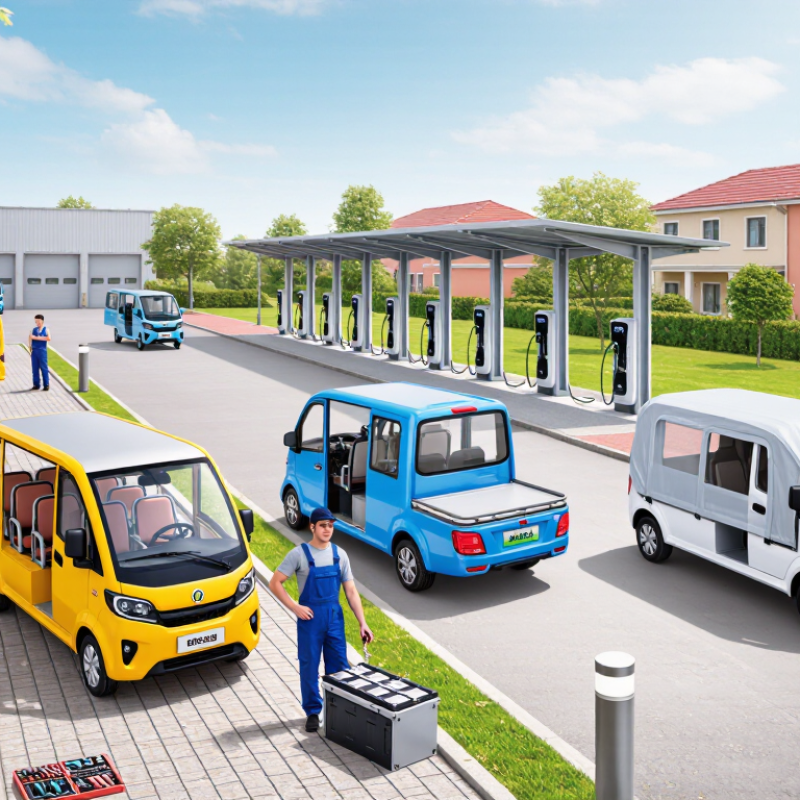
A low-speed vehicle (LSV) is not simply a small electric car. In the United States, NHTSA’s Federal Motor Vehicle Safety Standard No. 500 defines an LSV as a four-wheeled vehicle. Its top speed must exceed 20 mph but not exceed 25 mph. Its gross vehicle weight rating must remain below 3,000 pounds.
That speed limit shapes its real purpose. LSVs suit campuses, resorts, residential communities, industrial sites, and short urban trips. They can carry workers, tools, groceries, or several passengers across compact routes. They are quieter than conventional vehicles. They also need less energy for repeated low-speed journeys. Practical range still depends on battery size, temperature, load, road slope, and charging habits. That part is often underestimated.
Global buyers should treat “LSV” as a functional category, not a universal legal label. Local rules may classify the same vehicle differently. Equipment, lighting, braking, seating, and road access requirements can change by market. The IEA’s Global EV Outlook 2024 reported nearly 14 million electric car sales worldwide in 2023, representing about 18% of new car sales. However, that figure does not measure LSV demand directly. It only shows the expanding electric-vehicle ecosystem. Buyers still need careful route testing, payload checks, and local compliance reviews before choosing an LSV.
| Dimension | General LSV Information | Relevance for Global Buyers |
|---|---|---|
| Basic definition | A Low-Speed Vehicle is a road vehicle designed for short-distance transportation at a limited speed. The exact legal definition depends on the destination country or region. | Suitable for local mobility, planned communities, campuses, resorts, industrial sites, and neighborhood travel. |
| Typical speed classification | In the United States, a federal LSV generally has a maximum speed capability of more than 20 mph (32 km/h) and not more than 25 mph (40 km/h). Other markets may use different categories, such as low-speed quadricycles. | The limited-speed design can reduce energy use and support safer operation in areas with lower traffic speeds, subject to local rules. |
| Road-use limitations | In the United States, federal LSV rules generally restrict operation on roads with posted speed limits above 35 mph (56 km/h). Local authorities may impose additional restrictions. | Buyers should confirm permitted roads, registration requirements, insurance obligations, and driving-license rules before import or purchase. |
| Powertrain options | Common configurations include battery-electric drivetrains. Some low-speed vehicle categories in different markets may also use internal-combustion powertrains. | Electric models can offer quiet operation, zero tailpipe emissions, and lower routine drivetrain maintenance at the point of use. |
| Battery and charging | Battery capacity, chemistry, charging time, and driving range vary considerably by vehicle configuration, load, temperature, terrain, and driving conditions. Many models use standard alternating-current charging equipment. | A buyer should compare usable battery capacity, charger compatibility, charging-site requirements, warranty coverage, and replacement-battery availability. |
| Energy efficiency | Lower speed, compact dimensions, and lighter vehicle construction generally require less energy than a conventional passenger car for short-distance use. Actual efficiency depends on payload, road conditions, and climate. | Can help reduce operating energy costs when the vehicle is used mainly for short, predictable trips. |
| Vehicle size and maneuverability | LSVs are typically more compact than full-size passenger cars, although dimensions and seating layouts vary among two-, four-, and utility-oriented configurations. | Compact dimensions can simplify parking and maneuvering in narrow streets, residential areas, warehouses, campuses, and tourist facilities. |
| Passenger and cargo capacity | Available layouts may include two or more passenger seats, rear-facing seats, enclosed cabins, flatbeds, cargo boxes, or other utility configurations. Payload limits must be checked on the vehicle label and in the owner’s documentation. | Different configurations can support personal transportation, security patrols, maintenance work, deliveries, and facility operations. |
| Safety equipment | U.S. federal LSV requirements include items such as seat belts, lamps, mirrors, windshield requirements, and vehicle identification. Requirements in other countries may differ and may include additional crash-safety standards. | Verify homologation, lighting, seat-belt, braking, mirror, tire, and occupant-protection requirements before importing the vehicle. |
| Operating cost factors | Total cost of ownership depends on purchase price, electricity or fuel, maintenance, tires, insurance, registration, battery replacement, charging infrastructure, and local taxes. | A complete cost comparison is more reliable than comparing the purchase price alone. |
| Environmental considerations | Battery-electric LSVs have no tailpipe emissions during operation. Overall environmental impact also depends on electricity generation, battery production, vehicle lifespan, and end-of-life recycling. | May support low-emission mobility programs, but buyers should assess the full life cycle and local electricity mix. |
| Climate and terrain suitability | Cold temperatures, steep gradients, high payloads, rain, wind, and frequent stop-and-go driving can reduce available range and affect performance. | Request test data for the intended climate, road gradient, payload, and duty cycle rather than relying only on laboratory range figures. |
| Best-fit use cases | Common applications include neighborhood transportation, gated communities, resorts, hotels, campuses, airports, industrial facilities, farms, municipal services, and short-distance commercial delivery. | LSVs are most appropriate when travel distances are short, operating routes are predictable, and the local road network permits their use. |
Note: LSV classifications, technical standards, road access, registration, safety, and import requirements vary by country and jurisdiction. Buyers should confirm the applicable local regulations before purchase or deployment.
Its compact size suits campuses, resorts, farms, communities, and private sites.
Start with the route, not the showroom.
No. Vehicle classifications, speed limits, lighting rules, and road access vary widely.
Advertised range is only a reference point.
Compare usable capacity, charging voltage, connector type, warranty terms, and replacement support.
Confirm charging access at home, work, or the intended site.
Regular checks should include tire pressure, brakes, lights, mirrors, belts, and battery condition.
Seat belts, working lights, mirrors, brakes, and weather protection require regular inspection.
It may reduce operating complexity on short, predictable routes.
A Low Speed Vehicle (LSV) is a compact electric vehicle designed for short-distance travel at moderate speeds, making it well suited to neighborhoods, campuses, resorts, industrial parks, and other local environments. Compared with conventional cars, LSVs generally use less energy, create fewer emissions, and offer a practical solution for daily trips such as commuting, shopping, and community transportation. Their simple operation, lower running costs, and adaptable seating or cargo layouts make them attractive to buyers in many international markets.
Before purchasing, global buyers should review local regulations, registration requirements, road-use limitations, safety equipment standards, and insurance obligations, as these rules can vary by region. Charging access is also important, including power compatibility, charging time, battery capacity, and expected driving range. When selecting an LSV for international use, buyers should evaluate passenger capacity, climate suitability, durability, after-sales support, replacement parts, and total ownership costs to ensure the vehicle matches both practical needs and local conditions.