A Neighborhood Golf Car is no longer just a quiet vehicle beside a golf course. For global buyers, it can offer practical transport across resorts, campuses, gated communities, and large industrial sites. The setting matters. A vehicle that works well on smooth paths may feel less suitable on uneven pavement or during frequent rain.
Urban growth is part of the story. The United Nations’ 2018 World Urbanization Prospects estimated that 68% of the world’s population could live in urban areas by 2050. Meanwhile, the International Energy Agency reported nearly 14 million electric car sales worldwide in 2023. Those figures describe broader mobility trends, not neighborhood golf car demand. Still, they help explain why buyers are examining compact, electric transport options. Small can be useful.
Choosing well takes more than comparing the sticker price. Buyers should assess passenger capacity, battery type, range under real operating conditions, charging access, parts availability, and after-sales support. A six-seat model may suit a resort shuttle, while a smaller vehicle may be easier to park near homes or community facilities. Local terrain and daily travel distances matter more than glossy specifications. So does service.
Market research firms such as Grand View Research track the wider golf cart sector, but published market estimates vary by scope and methodology. That uncertainty deserves attention. A forecast is not a guarantee of resale value or product reliability. Buyers should verify specifications with manufacturers and request clear warranty terms. This guide explores the practical reasons global buyers consider a Neighborhood Golf Car—and the trade-offs worth examining before purchase.
What Is a Neighborhood Golf Car?
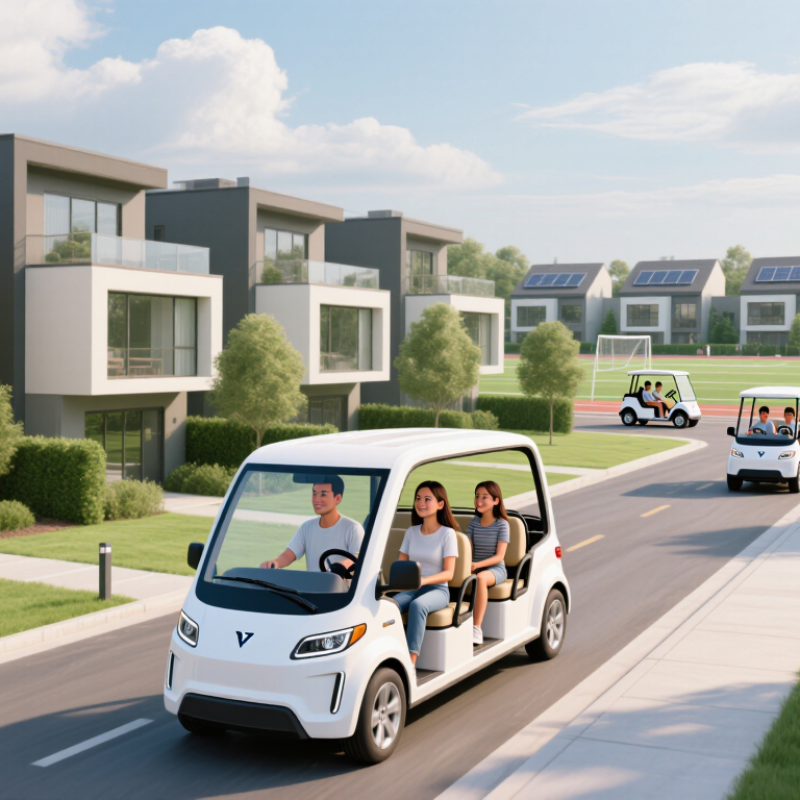
A neighborhood golf car is a compact, low-speed electric vehicle designed for short trips on private roads, planned communities, campuses, and approved local streets. It usually carries two to six people, uses a rechargeable battery, and travels more quietly than a conventional car. In the United States, NHTSA defines a low-speed vehicle as a four-wheeled vehicle traveling between 20 and 25 mph, with specific safety equipment requirements. A golf car may not meet that definition automatically.
The difference matters for global buyers. A practical inspection should check speed, braking distance, lighting, seat belts, ground clearance, battery type, and local road approval. Picture a narrow residential lane, a wet corner, and two passengers carrying groceries. Stability and stopping control become more important than appearance. Grand View Research valued the global golf cart market at about USD 1.89 billion in 2023, showing strong demand for compact mobility. However, market size does not prove that every vehicle suits every neighborhood.
Energy use is another useful comparison. The International Energy Agency reported that global electric car sales exceeded 14 million in 2023, reflecting wider acceptance of electric transport. Yet neighborhood golf cars remain a smaller, more specialized category. Their simple design can reduce operating costs, but limited range and charging access may create daily inconvenience. The category is not perfectly standardized. Buyers should verify technical documents, battery warranties, weather protection, and local registration rules before shipment. Small details can become expensive lessons.
Why Choose a Neighborhood Golf Car for Global Buyers?
A neighborhood golf car is a compact, low-speed vehicle designed for short-distance travel in residential communities, resorts, campuses, and local streets. Its lower operating speed can provide a practical balance between convenient mobility, easier parking, and reduced energy use.
How to read the chart: Traditional golf cars are commonly designed for around 15 mph, while neighborhood electric vehicles and low-speed vehicles may reach approximately 20–25 mph, depending on local regulations and vehicle specifications. Buyers should always confirm road-use requirements, safety equipment, registration rules, and speed limits in their destination country.
How Do Neighborhood Golf Cars Serve Everyday Mobility Needs?
For global buyers, a neighborhood golf car can simplify short daily journeys.
It can carry groceries, school bags, tools, or two passengers without using a full-size vehicle. On residential routes, its compact width helps it pass through narrow lanes and fit into smaller parking spaces. Quiet electric operation also reduces disturbance during early errands. Short trips matter. However, buyers should measure their actual distances instead of trusting advertised range. Hills, passengers, weather, and repeated stops can reduce usable battery performance.
These vehicles support mobility around planned communities, campuses, resorts, farms, and waterfront neighborhoods.
A low step-in height may help older users, while stable seating can make local travel less tiring. Some configurations include weather screens, headlights, mirrors, seat belts, and storage areas. Equipment should match the journey. Someone traveling after sunset needs reliable lighting and visibility, not decorative accessories. Local traffic rules, registration requirements, speed limits, and permitted roads vary widely. Checking with a qualified local dealer or transport authority is essential before purchase.
From a maintenance perspective, inspect braking, steering, tires, battery condition, charging equipment, and frame quality.
Ask for service records when buying a used vehicle. That step is easy to skip. It can prevent costly surprises. Neighborhood golf cars are useful, but they cannot replace cars in every situation. Long-distance travel, heavy rain, steep terrain, and emergency transport may expose their limits. Battery access and local service availability deserve careful attention.
Which Features Make Them Practical for Global Buyers?
Why Choose a Neighborhood Golf Car for Global Buyers?
A neighborhood golf car becomes practical when its features match daily movement. During practical evaluations, compact dimensions often matter more than maximum speed. They fit narrow lanes, small parking areas, and crowded residential paths. That matters. A tight turning radius also helps drivers move around garden walls, market stalls, and parked bicycles.
Electric power can reduce routine maintenance and support quieter neighborhood travel. Buyers should check charging compatibility before ordering across borders. Battery capacity, charging time, and replacement access deserve careful attention. A vehicle that works well in one climate may struggle in another. Heat, humidity, dust, and steep streets can change real-world performance. Weather-resistant seating and a simple protective roof add useful comfort. Enclosed storage is valuable when carrying groceries, tools, or small packages.
Safety features should remain easy to understand. Clear lighting, reliable brakes, mirrors, seat belts, and steady handling support different driving habits. Some buyers may prefer rear seats, while others need a flat cargo deck. Adjustable seating can help families share one vehicle. However, extra accessories increase weight and maintenance needs.
I initially underestimated this trade-off. More equipment is not always more practical.
Local service support, spare parts, and readable manuals also influence ownership after delivery. Buyers should confirm operating requirements in their area before purchase, because neighborhood access rules and vehicle classifications can differ.
What Should Buyers Assess Before Choosing a Model?
Before choosing a neighborhood golf car, buyers should match the model to daily conditions. Measure narrow gates, parking spaces, and turning areas. A vehicle that looks compact online may feel awkward beside a garage wall. Check the rated passenger load, cargo capacity, ground clearance, and suspension design. These details matter on uneven paths, wet grass, and sloped driveways.
Battery choice deserves careful attention. Ask about charging time, expected range, replacement cost, and battery availability in your region. Test the charger with the local electrical standard. A quiet motor is useful, but weak hill performance can become frustrating. Inspect the brakes, lights, mirrors, seat belts, tires, and emergency controls. Small parts often reveal how carefully a vehicle was assembled. Do not trust polished photos alone.
Local rules can differ greatly. Confirm whether registration, lighting, speed limits, or specific safety equipment apply where you live. Request clear technical documents, warranty conditions, service contacts, and spare-parts support. A low purchase price may become expensive when parts travel across borders. I would also drive the vehicle with a realistic load, not an empty seat. That test may expose slower acceleration or uncomfortable handling. No checklist is perfect. Personal habits, climate, and road quality can still change the right choice.
How Do Regulations and Support Affect International Ownership?
Local regulations
International ownership begins with a local rulebook, not a glossy specification sheet. Neighborhood golf cars may be treated as private vehicles, low-speed vehicles, or off-road equipment. That classification changes registration, insurance, lighting, speed limits, and permitted roads. Ask the transport authority in your intended area. Do not rely on advice from a distant seller. Requirements can differ between a city, province, and private community. Import documents matter too. Check customs paperwork, serial identification, battery declarations, and required safety certificates before payment.
After-sales support
Support after delivery can determine whether ownership feels simple or frustrating. A reliable supplier should provide clear manuals, wiring information, maintenance schedules, and practical troubleshooting guidance. Local technicians also need access to compatible parts and battery knowledge. Ask how replacement components are shipped, how long repairs usually take, and who handles technical questions across time zones. Language support is useful, especially when safety instructions are involved.
Before you decide
Small details are often missed. A charger designed for one electrical system may not suit another. Storage conditions can also affect battery life in hot, humid regions. I have seen careful buyers focus on price and overlook service distance. That decision can become expensive. Regulations may change, and online information can become outdated. Recheck official requirements before importing, registering, or modifying the vehicle. The best choice is not always the fastest delivery.
Conclusion
A Neighborhood Golf Car is a compact, low-speed electric vehicle designed for short-distance transportation in residential communities, campuses, resorts, and other local areas. Unlike a conventional car, it focuses on convenient daily mobility, helping users travel to nearby shops, schools, workplaces, recreational facilities, and community services. Its small size, quiet operation, easy handling, and efficient energy use make the Neighborhood Golf Car appealing to global buyers seeking a practical alternative for local transportation.
Before choosing a model, buyers should assess seating capacity, driving range, charging time, weather protection, safety equipment, storage space, build quality, and overall maintenance needs. Local road-use rules, speed limits, registration requirements, charging standards, and insurance obligations may differ by country or region, so compliance should be confirmed in advance. Reliable parts availability, clear user documentation, warranty coverage, and responsive after-sales support are also essential for smooth international ownership.