China’s Neighborhood Electric Vehicle sector is expanding through compact design, low operating costs, and practical urban mobility. These vehicles often move quietly through residential streets, industrial parks, campuses, and tourist districts. Their small frames can fit narrow lanes and modest parking spaces. Yet the category remains imperfectly defined. Some reports include low-speed electric vehicles, while others count only road-certified models.
The China Association of Automobile Manufacturers reported 12.866 million new energy vehicle sales in China during 2024. That figure covers passenger cars, commercial vehicles, and other categories, not only Neighborhood Electric Vehicle products. The International Energy Agency also reported that China remained the world’s largest electric-car market in 2024. These figures show industrial strength, but they do not automatically identify the best neighborhood vehicle manufacturers. That distinction matters.
Companies such as Lichi, Shandong Shifeng, Fulu, and Levdeo are frequently discussed in China’s compact electric-vehicle market. Their differences appear in battery chemistry, driving range, cabin protection, after-sales support, and certification strategy. Buyers should inspect factory records, warranty terms, controller quality, and replacement-battery access.
Fatih Birol, Executive Director of the International Energy Agency, has called electric cars “one of the pillars of the clean energy transition.” His statement supports the broader direction, not every small vehicle claim. Market rankings can also change quickly. Therefore, this guide compares Chinese manufacturers through measurable evidence, including production capability, product safety, export experience, technical depth, and customer support. The results may not satisfy every buyer. That is precisely why careful comparison remains necessary.
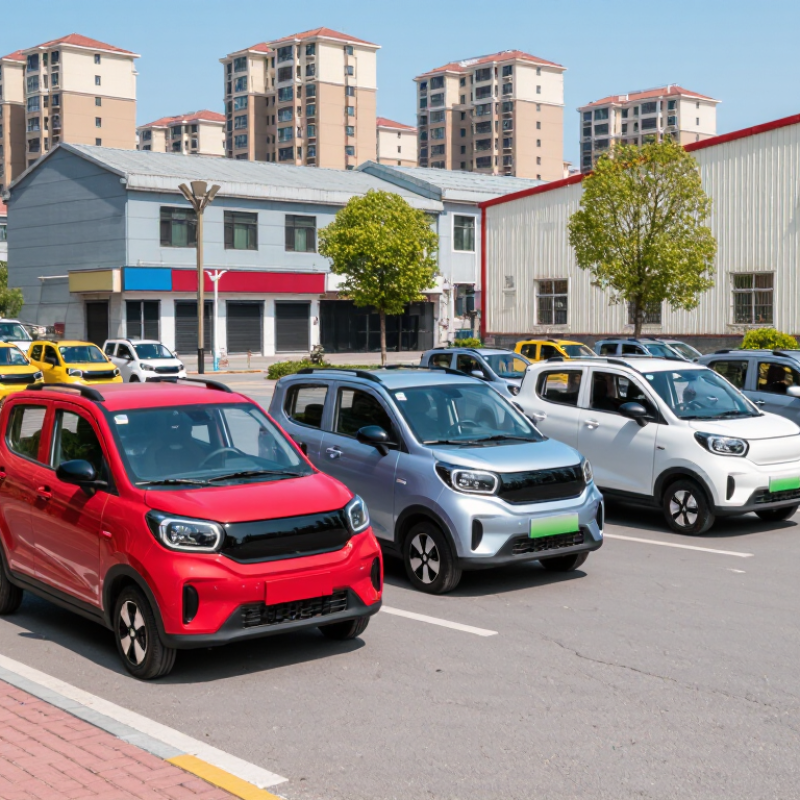
A neighborhood electric vehicle is a compact, battery-powered vehicle designed for short local trips. It typically carries two to six people and travels at lower speeds than a full-size car. In many markets, its permitted speed falls near 20 to 25 miles per hour, but local rules can differ.
Quiet streets. That matters.
These vehicles suit residential roads, private communities, campuses, and planned developments. A typical model may include headlights, seat belts, mirrors, turn signals, and a simple dashboard. Buyers should check battery capacity, charging time, braking performance, and ground clearance. A small vehicle can struggle on steep roads or rough pavement. That detail is easy to overlook.
From a manufacturing perspective, dependable construction matters more than attractive styling. The frame should resist corrosion, while wiring needs protection from moisture and vibration. Lithium batteries may reduce weight, but replacement costs can be significant. Lead-acid systems may cost less initially, though they often require more maintenance and weigh more. Real-world range also changes with passengers, weather, hills, and tire pressure.
Regulatory status deserves careful attention. Some neighborhoods allow these vehicles only on designated roads, while others require registration, insurance, or specific safety equipment. Buyers should verify local requirements before ordering. Manufacturer specifications are useful, but independent inspections provide stronger evidence. I would not judge quality from a showroom photograph alone. A short test drive can reveal weak brakes, noisy suspension, or awkward steering.
In the United States, a neighborhood electric vehicle is generally classified as a low-speed vehicle. Federal safety rules define its operating-speed range as 20–25 mph (32–40 km/h), making it suitable for residential roads, campuses, resorts, and short urban trips rather than high-speed highways.
The chart shows the federal low-speed vehicle speed thresholds commonly used to describe neighborhood electric vehicles in the United States. Local road-access rules may vary by state or municipality.
China’s neighborhood EV industry grew from simple low-speed transport into a more regulated urban mobility sector. Early vehicles often served short trips between homes, markets, factories, and suburban rail stations. Their small bodies, narrow turning circles, and modest battery packs matched these streets well. However, safety standards and registration rules varied across regions.
The development accelerated as China’s wider electric vehicle market expanded. The China Association of Automobile Manufacturers reported 9.495 million new-energy vehicle sales in 2023, representing 31.6% of total new-car sales. The International Energy Agency also reported that China accounted for nearly 60% of global electric car sales that year. This scale lowered battery and motor costs, helping smaller manufacturers improve range, braking systems, lighting, and cabin protection.
The category remains blurry.
“Neighborhood EV” is not a single official statistical class. Some products resemble compact passenger cars, while others remain limited-speed utility vehicles. That makes manufacturer comparisons difficult. A 2024 industry assessment from the China Electric Vehicle 100 Association emphasized that safety, charging access, and lifecycle reliability still require stronger coordination. In practice, a dependable vehicle should start easily on a cold morning, manage uneven residential roads, and provide clear battery information. Price alone is not enough. Some market claims still rely on optimistic range figures, and independent long-term testing remains limited.
This table summarizes the development of China’s neighborhood electric vehicle ecosystem through officially reported new-energy-vehicle data, policy milestones, product characteristics, and manufacturing trends. “Neighborhood EV” is used here as a practical market term covering compact low-speed vehicles, golf-cart-style vehicles, utility vehicles, and other small electric vehicles used for short-distance mobility.
| Period | Industry Development Milestone | Officially Reported China NEV Sales | Market and Manufacturing Significance | Typical Neighborhood EV Implication | Reference |
|---|---|---|---|---|---|
| 2009 | The “Ten Cities, Thousand Vehicles” program began promoting the demonstration use of electric vehicles in public transport, municipal services, taxis, and other fleet applications. | National NEV retail and sales statistics were not yet reported in the modern standardized format. | Government-led fleet demonstrations created early demand for electric drivetrains, batteries, charging equipment, and vehicle-control systems. | Short-distance electric mobility gained visibility in residential communities, industrial parks, tourist areas, and public facilities. | State Council and Ministry of Science and Technology policy records |
| 2015 | China expanded purchase incentives, demonstration programs, charging infrastructure planning, and manufacturing support for new-energy vehicles. | Approximately 331,000 units of NEVs were sold. | Suppliers began moving from pilot-scale production toward standardized battery packs, electric motors, controllers, and vehicle platforms. | Neighborhood EV suppliers increasingly adopted modular components and more repeatable assembly processes. | China Association of Automobile Manufacturers; State Council policy documents |
| 2017 | China continued building charging infrastructure and strengthened technical and safety requirements for electric vehicles and batteries. | Approximately 777,000 units of NEVs were sold. | Higher production volumes improved component availability and reduced the cost of motors, controllers, battery-management systems, and charging equipment. | Small electric vehicles benefited from a wider domestic supplier base and shorter component procurement cycles. | China Association of Automobile Manufacturers; National Energy Administration |
| 2019 | China introduced stronger market-oriented incentive adjustments and continued the development of mandatory vehicle and battery safety requirements. | Approximately 1.206 million units of NEVs were sold. | Manufacturers faced greater pressure to improve energy efficiency, reliability, range consistency, production quality, and after-sales support. | Neighborhood EV production began shifting from basic low-speed assembly toward better-integrated electrical systems and improved safety controls. | China Association of Automobile Manufacturers; Ministry of Industry and Information Technology |
| 2020 | The national strategy for new-energy vehicles emphasized technological innovation, industrial-chain resilience, charging networks, and electrification of public services. | Approximately 1.367 million units of NEVs were sold. | Battery, motor, electronic-control, and charging suppliers continued expanding despite temporary disruptions in the wider automotive supply chain. | Demand for compact electric vehicles remained linked to campuses, resorts, warehouses, factories, communities, and municipal applications. | State Council Development Plan for the New Energy Vehicle Industry; China Association of Automobile Manufacturers |
| 2021 | China accelerated electrification, expanded charging infrastructure, and strengthened the national industrial chain for batteries and electric vehicles. | Approximately 3.521 million units of NEVs were sold. | Rapid volume growth improved economies of scale in lithium-ion batteries, permanent-magnet motors, power electronics, telematics, and charging equipment. | Neighborhood EV manufacturers gained access to more mature components, but also faced higher expectations for battery protection, braking, lighting, and electrical safety. | China Association of Automobile Manufacturers; National Energy Administration |
| 2022 | China continued supporting NEV adoption through infrastructure development, tax policies, public-sector electrification, and industrial-chain investment. | Approximately 6.887 million units of NEVs were sold. | Battery supply, electric-drive integration, software controls, and intelligent manufacturing became increasingly important competitive capabilities. | Small electric vehicle producers increasingly differentiated products by payload, seating capacity, operating environment, battery chemistry, and customization. | China Association of Automobile Manufacturers; Ministry of Industry and Information Technology |
| 2023 | China’s NEV market entered a higher-volume stage, supported by charging-network expansion, model diversification, and continuing industrial policy. | Approximately 9.495 million units of NEVs were sold, representing about 31.6% of total new-vehicle sales. | Manufacturing moved toward platform-based development, automated assembly, battery traceability, higher software content, and more rigorous quality management. | Neighborhood EV buyers benefited from broader choices in compact utility vehicles, shuttle vehicles, maintenance vehicles, and low-speed transport platforms. | China Association of Automobile Manufacturers; Ministry of Industry and Information Technology |
| 2024 | China’s NEV industry continued expanding in domestic and overseas markets, while charging infrastructure, battery recycling, and product safety remained key development areas. | Approximately 12.866 million units of NEVs were sold, with NEVs accounting for about 40.9% of total new-vehicle sales. | Large-scale production strengthened the domestic ecosystem for lithium iron phosphate batteries, battery-management systems, electric axles, charging equipment, connected controls, and export-compliant vehicle systems. | Neighborhood EV manufacturers increasingly competed on total operating cost, serviceability, battery life, safety compliance, customization, and suitability for controlled-use environments. | China Association of Automobile Manufacturers; Ministry of Industry and Information Technology |
| Current Market Structure | China does not publish one unified national statistical category called “neighborhood electric vehicles.” Products are commonly classified by vehicle type, speed, intended use, road permission, or local regulatory rules. | Segment-specific national sales totals are therefore not directly comparable with the official NEV total. | The supply base includes vehicle assemblers, battery suppliers, motor and controller manufacturers, charging-equipment providers, body and chassis suppliers, and specialized integrators. | Selection should be based on operating area, permitted speed, passenger or cargo requirements, battery chemistry, charging access, climate, maintenance capability, and local compliance requirements. | Ministry of Industry and Information Technology; local vehicle administration rules; national NEV statistical definitions |
Important classification note: Official national statistics generally cover new-energy passenger vehicles, commercial vehicles, buses, and related categories rather than a separate “neighborhood EV” class. Low-speed and closed-site vehicles may be governed by different national standards, local rules, or usage restrictions, so manufacturers and buyers should verify the applicable certification, road-access, speed, safety, and registration requirements.
Data basis: China Association of Automobile Manufacturers annual vehicle statistics, State Council new-energy-vehicle development plans, Ministry of Industry and Information Technology policy and standards information, and National Energy Administration charging-infrastructure information.
China’s leading neighborhood electric vehicle manufacturers are building practical mobility for short urban trips. Their products typically use compact bodies, simple dashboards, low-speed drivetrains, and batteries sized for daily errands. Some models offer removable battery packs, wider seats, enclosed cabins, and small cargo areas. These details matter in crowded residential streets.
The International Energy Agency’s Global EV Outlook 2024 reported nearly 14 million electric car sales worldwide in 2023, with China accounting for more than half. However, neighborhood vehicles are usually tracked separately from passenger cars. That data gap makes direct market comparisons difficult. It also means buyers should examine battery chemistry, charging time, braking systems, and after-sales support instead of relying on sales claims.
Chinese manufacturers increasingly combine lithium battery systems with lightweight steel or aluminum structures. Lithium packs can reduce maintenance and improve usable range, while lead-acid batteries remain common in lower-cost products. China’s Ministry of Industry and Information Technology reported national new-energy vehicle production above 9.5 million units in 2023, showing strong industrial depth, though this figure includes many vehicle categories beyond neighborhood models. Quality still varies. Independent testing, clear warranty terms, and verified safety certification deserve more attention. The sector is growing quickly, but its information is not always equally mature.
Chinese neighborhood electric vehicles are shifting from basic utility carts toward safer, smarter urban transport. The China Association of Automobile Manufacturers reported 12.87 million new-energy vehicle sales in 2024. This wider market supports faster battery development and lower component costs. Neighborhood models commonly use compact bodies, 48V or 60V electrical systems, and lithium iron phosphate batteries. These systems provide steady range for short commutes, school runs, and local shopping. Regenerative braking can recover energy during downhill driving. Some models also add LED lighting, digital dashboards, reverse cameras, and app-based charging information.
Battery safety deserves closer attention.
The International Energy Agency reported that global battery pack prices fell sharply in 2023, although prices vary by chemistry and region. Lower prices can improve affordability, but cheaper parts may reduce durability. Thermal protection, battery management software, sealed connectors, and physical cell spacing are essential features. Cabin insulation also matters during winter mornings. A small weakness remains: some vehicles still have limited suspension travel and modest crash protection. Buyers should not confuse a low-speed vehicle with a full passenger car.
Tips:
Check the battery warranty, charging time, rated payload, and local speed rules. Ask for test results, not only brochure claims. Inspect welds, door hinges, tire quality, and underbody protection. The IEA also notes that charging access strongly influences electric vehicle adoption. A home socket may be enough for daily use, but public charging compatibility adds practical flexibility. Real-world range can fall in cold weather, heavy rain, or with four passengers. That detail is easy to overlook.
Evaluating Chinese neighborhood EV manufacturers requires more than comparing advertised prices. Start with factory evidence: battery traceability, production consistency, supplier controls, and documented quality inspections. A polished factory tour can still mislead. Request recent third-party test reports, not only internal certificates.
Market scale offers useful context, but it does not prove reliability. The China Association of Automobile Manufacturers reported 9.59 million new-energy vehicles produced in 2023, with 9.50 million sold. The International Energy Agency recorded more than 14 million electric car sales worldwide that year, including about 8 million in China. These figures show manufacturing strength. They do not specifically measure neighborhood EV durability.
Check the details that owners experience daily. Ask for battery chemistry, usable capacity, thermal protection, charging limits, and replacement costs. A clear warranty should define coverage, mileage, and response time. Evaluate brake components, frame protection, lighting, seat belts, and software updates against your destination market’s requirements. Confirm whether the vehicle is legally classified for public-road use there. This matters greatly.
After-sales support is often underestimated. Test how quickly the manufacturer answers technical questions. Ask for parts availability in writing. Review failure data from fleet users, not only showroom comments. I would inspect vehicles after several months of service, if possible. That step is inconvenient, but skipping it may be expensive. Even strong suppliers can have weak documentation. Reflect on that before signing.
It is a compact, battery-powered vehicle for short local trips. It usually carries two to six people. Typical speeds range from 20 to 25 miles per hour, depending on local rules. Quiet streets suit it well.
They may suit residential roads, private communities, campuses, and planned developments. Some areas permit them only on designated roads. Check local requirements before ordering.
Useful features include headlights, seat belts, mirrors, turn signals, and a simple dashboard. Enclosed cabins and small cargo areas can improve daily practicality. Do not judge comfort from a photograph.
Steep roads and rough pavement can challenge small vehicles. Passenger weight, hills, weather, and tire pressure can reduce real-world range. A short test drive may expose weak brakes or awkward steering.
Lithium batteries usually reduce weight and improve usable range. Replacement costs can be significant. Lead-acid batteries often cost less initially but weigh more and need more maintenance. There is no perfect choice.
The industry grew from simple low-speed transport into a more regulated urban mobility sector. Wider electric vehicle production helped reduce battery and motor costs. The category remains blurry.
“Neighborhood EV” is not one official statistical category. Some products resemble small passenger cars, while others remain limited-speed utility vehicles. Sales figures may combine very different vehicle types.
Check battery capacity, charging time, braking performance, ground clearance, warranty terms, and safety certification. Look for protected wiring and corrosion-resistant frame materials. Independent inspection provides stronger evidence than optimistic range claims. Reliability information is still imperfect.
A Neighborhood Electric Vehicle is a compact, low-speed electric vehicle designed for short-distance travel in residential communities, campuses, resorts, industrial parks, and urban neighborhoods. China’s industry has developed rapidly through improvements in battery systems, electric drive technology, intelligent controls, and cost-efficient manufacturing. As demand grows for clean, convenient, and affordable local transportation, Chinese manufacturers are offering a wider range of small electric vehicles for personal, commercial, and community use.
Chinese Neighborhood Electric Vehicle manufacturers commonly focus on practical design, energy efficiency, flexible customization, and reliable after-sales support. Key technologies may include lithium or lead-acid battery options, efficient motors, regenerative braking, digital dashboards, safety systems, and charging solutions suited to different environments. When evaluating a manufacturer, buyers should consider product quality, battery performance, driving range, safety certifications, production capacity, customization services, warranty policies, spare-parts availability, and export experience. A dependable supplier should combine transparent communication with consistent quality control and long-term technical support.