0%

Choosing a Fully Loaded Golf Cart in 2026 requires more than counting seats, speakers, and shiny accessories. Buyers now expect dependable batteries, safer braking, practical storage, and comfort during longer property trips. A cart may look impressive beside a clubhouse, yet perform poorly on steep paths or uneven gravel.

Industry consultant Mike Sipe offers a useful warning: “Buy the cart for how you will use it, not how you want it to look.” That advice deserves attention. A four-seat model with lithium batteries may suit a gated community, while a utility-focused cart may better serve farms, resorts, or large private grounds. Think about daily distance, charging access, weather exposure, passenger weight, and maintenance support. Small details matter. Cup holders do not.

This guide examines the features that define a genuinely capable Fully Loaded Golf Cart in 2026. It considers battery technology, motor output, suspension, tires, lighting, connectivity, and passenger protection. It also questions popular upgrades that add cost without improving real-world use. That part is easy to overlook. A premium sound system cannot compensate for weak brakes or poor dealer support.

You will also find practical inspection advice, ownership considerations, and questions to ask before signing an order. Specifications can change between brands and regions, so verify every claim with the manufacturer and a qualified local dealer. No cart is perfect. The best choice balances performance, comfort, reliability, and honest expectations.
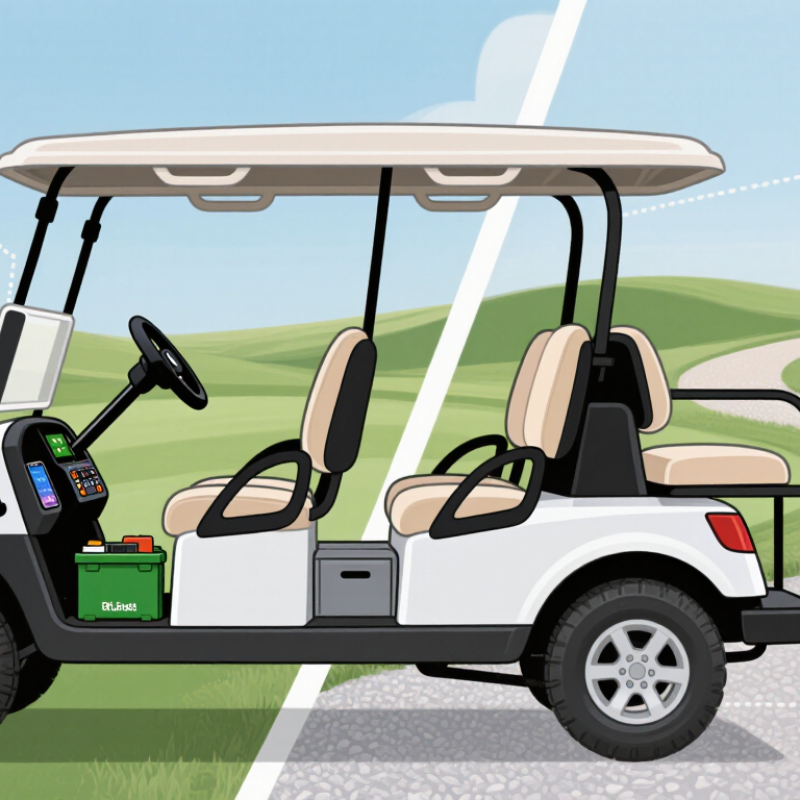
How to Choose a Fully Loaded Golf Cart in 2026?

Define What “Fully Loaded” Means for Your Golf Cart

How to Choose a Fully Loaded Golf Cart in 2026?

Define What “Fully Loaded” Means for Your Golf Cart

“Fully loaded” should describe your needs, not a long feature list. For one driver, it may mean comfortable seats, a quiet motor, strong lighting, and weather protection. For a family, it may include extra seating, storage space, seat belts, and a stable suspension system. More equipment can also mean more weight, maintenance, and charging time.

I once tested a cart with impressive accessories but limited storage. It looked complete, yet daily errands became inconvenient. That experience changed my buying checklist. Ask how the cart will be used on ordinary days. Measure your parking area. Check the turning radius, ground clearance, battery access, and payload rating. A powerful motor is useful on hills, but unnecessary upgrades may increase the price without improving your routine.

Tips: Separate essential features from attractive extras. Confirm the charger, battery warranty, lighting, brakes, and safety equipment before comparing prices. Inspect the frame and connections carefully. Ask for service records when buying used. A digital display may look modern, but reliable brakes matter more. Test the cart with passengers and cargo, not only during an empty showroom drive. Also, verify local road-use requirements, because equipment rules can differ by location. The “best” configuration may still need adjustment after real-world use.

Compare Powertrains, Range, and Charging Requirements

How to Choose a Fully Loaded Golf Cart in 2026?

A fully loaded golf cart needs more than attractive seats and bright lighting. Every extra feature adds weight, and weight reduces usable range. Electric models usually offer quiet operation, simpler maintenance, and lower local emissions. Gasoline models can refuel quickly and suit remote courses without reliable outlets. The U.S. Department of Energy reports that lithium-ion battery prices reached about $115 per kilowatt-hour in 2024, improving the long-term case for electric powertrains. However, cart battery pricing can differ sharply from automotive pricing.

Range claims require careful reading. A 48-volt electric cart may travel roughly 25 to 50 miles per charge, depending on terrain, passenger load, temperature, and speed. That range can fall quickly on steep paths. Gasoline carts often provide longer continuous use, but fuel storage and engine servicing add practical work.

My imperfect rule is simple: choose electric for predictable daily routes, and gasoline for extended, irregular use. It is not universal.

Charging space matters. A standard onboard charger may need six to ten hours for a full recharge, while damaged outlets or undersized circuits create avoidable delays. The U.S. Department of Energy’s Alternative Fuels Data Center advises checking voltage, connector compatibility, and circuit capacity before installation.

The International Energy Agency also recorded global electric-car sales above 17 million in 2024, showing stronger battery supply and charging expertise. Still, golf-cart batteries are not car batteries. Ask for usable capacity, warranty terms, charger output, and real-world range testing before paying for a heavier package.

Evaluate Comfort, Utility, Safety, and Smart Features

A fully loaded golf cart should feel comfortable before it feels impressive. The National Golf Foundation reported 28.1 million on-course golfers in 2023. That scale makes seating quality important. Choose contoured seats, firm back support, and enough legroom for four adults. Test the steering position with the windshield raised. A quiet ride also reduces fatigue during long rounds. Some buyers overlook weather protection. That mistake becomes obvious in cold rain.

Utility deserves practical testing. Check the cargo bed with two golf bags, groceries, or maintenance tools inside. Confirm the suspension does not sag under weight. A published payload rating is more useful than a glossy accessory list. Lithium batteries can reduce maintenance and improve usable range, but range changes with hills, temperature, passengers, and tire pressure. The U.S. Department of Energy notes that vehicle efficiency depends heavily on operating conditions. Real use is messier.

Safety features should receive equal attention. The Consumer Product Safety Commission has repeatedly identified falls and ejections as major golf-cart injury concerns. Look for seat belts, reliable brakes, bright lighting, mirrors, and stable handholds. Smart functions can help, but they are not magic. Battery monitoring, GPS tracking, remote diagnostics, and app-based access may improve control. However, weak connectivity can make an app frustrating. I would inspect manual controls first. Then test every digital feature twice. A fully loaded cart is useful only when people can operate it confidently.

How to Choose a Fully Loaded Golf Cart in 2026? - Evaluate Comfort, Utility, Safety, and Smart Features

Evaluation Area Data Dimension Recommended 2026 Benchmark Why It Matters How to Verify Before Buying
Comfort Passenger capacity Four to six occupants, with a load-rated rear seat when additional passengers are required Determines whether the cart can transport a family or group without exceeding its rated capacity Check the vehicle certification label and the stated seating capacity
Seat dimensions and support Seat width of approximately 18–22 inches per passenger, with contoured cushions and supportive backrests Improves comfort during extended neighborhood, resort, or property use Sit in every seating position and check legroom, hip room, cushion firmness, and back support
Ride quality Independent front suspension or a well-tuned leaf-spring system, hydraulic or gas shock absorbers, and pneumatic tires Reduces vibration and improves control on uneven pavement and compact gravel Take a test drive over smooth pavement, speed humps, and a moderately uneven surface
Weather protection Roof, windshield, side curtains or doors, weather-resistant seats, and effective drainage Makes the cart more usable in sun, light rain, and changing conditions Inspect roof coverage, windshield quality, water sealing, and the availability of replacement panels
Noise and vibration Electric drivetrain with low operating noise and minimal steering-wheel or seat vibration Supports conversations and provides a more refined driving experience Test the cart at low and maximum operating speed and listen for drivetrain or suspension noise
Utility Battery chemistry Lithium-ion battery pack with an integrated battery-management system, or a clearly documented deep-cycle lead-acid system Lithium systems generally reduce weight and maintenance, while lead-acid systems may have a lower initial cost Confirm usable capacity, warranty terms, service requirements, and battery replacement cost
System voltage A 48-volt system for general transport; 72 volts may be appropriate for heavier loads or steeper terrain when properly engineered Higher system voltage can support efficient power delivery, but it does not alone determine performance Compare motor output, controller rating, vehicle weight, and manufacturer load limits together
Real-world driving range Approximately 25–50 miles per charge under moderate loads and mostly level, low-speed driving Range decreases with hills, high speed, cold weather, heavy cargo, tire pressure problems, and frequent stops Request test conditions for the stated range and select at least 20% more capacity than the normal daily route
Payload capacity Approximately 800–1,500 pounds, including passengers, cargo, accessories, and battery weight Prevents overloading, premature suspension wear, reduced braking performance, and shortened range Read the gross vehicle weight rating and subtract the cart's curb weight
Cargo practicality Lockable front storage, a rear cargo bed or fold-down seat, drainage, and a practical payload rating Allows the cart to carry groceries, tools, sports equipment, or maintenance supplies Measure the cargo area and verify bed dimensions, tie-down points, and tailgate capacity
Charging performance Automatic charger with overcharge protection; a typical full charge may take about 4–8 hours depending on battery size and charger output Determines whether the vehicle can be conveniently recharged between daily uses Confirm charging voltage, connector type, outdoor-use rating, charging time, and circuit requirements
Safety Braking system Four-wheel hydraulic or electronically controlled braking, a mechanical parking brake, and predictable stopping performance Provides better control when carrying passengers or traveling downhill Test stopping on level ground and verify service intervals and replacement-part availability
Seat belts and occupant restraint Three-point belts where available, properly anchored lap belts for all seating positions, and secure handholds Helps keep occupants positioned during acceleration, braking, or a sudden maneuver Check belt anchorage, buckle operation, seat design, and the vehicle's intended road-use classification
Lighting and visibility LED headlights, rear lamps, brake lamps, turn signals, reflectors, horn, mirrors, and a windshield wiper when road use requires them Improves visibility and helps other road users recognize the cart Confirm all equipment required by the local low-speed-vehicle or neighborhood-vehicle rules
Structure and rollover protection Strong roof supports, a stable chassis, non-slip flooring, and a properly engineered occupant-protection structure Reduces injury risk and improves stability during normal operation Inspect welds, roof supports, floor condition, steering play, and suspension mounting points
Hill-hold and reverse control Controlled acceleration, regenerative braking where fitted, reverse warning, and reliable parking-brake engagement Helps prevent unintended movement on slopes and in crowded areas Test forward, reverse, parking-brake hold, and low-speed maneuvering on a safe incline
Smart Features Battery monitoring State-of-charge display, estimated remaining range, battery temperature alerts, and fault notifications Makes energy planning easier and can identify problems before they cause a breakdown Check whether displayed range adapts to driving conditions and whether diagnostic codes are accessible
Connected tracking Optional GPS location, geofencing, usage history, and remote status monitoring with clear privacy controls Useful for large properties, shared vehicles, theft recovery, and fleet management Review cellular coverage, subscription fees, data ownership, and offline functionality
Driver display and controls Readable digital display showing speed, battery status, direction, lights, alerts, and service information Allows the driver to monitor the vehicle without distraction Check visibility in direct sunlight, glove-friendly controls, and the clarity of warning messages
Connectivity and entertainment USB charging ports, Bluetooth audio, weather-resistant speakers, and a 12-volt accessory outlet Adds convenience for recreational and property-use applications Verify water resistance, fuse protection, charging output, and standby battery drain
Software and service support Documented firmware updates, accessible diagnostics, service reminders, and downloadable manuals Reduces long-term maintenance uncertainty and improves troubleshooting Ask who performs software updates, how long support is provided, and whether paid subscriptions are required
Selection note: The figures above are typical market benchmarks rather than guarantees. Actual range, payload, speed, charging time, and required road equipment vary by vehicle configuration, terrain, weather, battery condition, and local regulations. Always confirm the official specification sheet and local legal requirements before purchase.

Check Build Quality, Legal Compliance, and Maintenance Needs

A fully loaded golf cart can look impressive under showroom lights, but appearance can hide weak construction. I once focused on upholstery and missed a loose seat bracket. That mistake changed my inspection routine. I now examine welds, frame joints, roof supports, and fasteners closely. Ask for a cold start, not only a polished demonstration. The cart should brake straight, steer without excessive play, and roll quietly over uneven ground. Check tire wear, battery housing, cable insulation, and rust beneath the chassis.

Legal compliance depends on where the cart will operate. Confirm local requirements before paying. A road-ready model may need approved lighting, mirrors, seat belts, reflectors, a windshield, and a compliant speed limit. Verify the vehicle identification number, ownership documents, safety equipment, and any required inspection records. Do not assume factory-installed equipment guarantees approval. Regulations can change, and sellers may misunderstand them.

Maintenance needs should match your time, tools, and driving conditions. Electric systems require battery inspections, terminal cleaning, proper charging, and periodic brake checks. Gas-powered systems need oil, filters, belts, and exhaust inspections. Ask for a written service schedule and real replacement costs. Inspect the charger, suspension bushings, steering linkage, and parking brake before purchase. I still underestimate how quickly tires wear on rough paths. A short test drive reveals more than a long sales explanation.

How to Choose a Fully Loaded Golf Cart in 2026

A well-equipped golf cart should balance build quality, legal compliance, and predictable maintenance. The chart shows practical inspection intervals commonly used for routine ownership: tire-pressure checks monthly, flooded lead-acid battery water checks monthly, brake inspections every six months, and an annual battery-capacity test. Actual intervals should always follow the vehicle’s service manual and local regulations.

Match the Cart to Your Budget, Terrain, and Driving Plans

How to Choose a Fully Loaded Golf Cart in 2026?

A fully loaded golf cart should fit your budget before it impresses you with features. Set a realistic spending limit, including delivery, registration, charging equipment, and future battery replacement. A low purchase price can hide expensive maintenance. I once focused too much on appearance and overlooked tire quality. That mistake made rough paths feel even rougher.

Terrain should guide your suspension, tires, brakes, and motor choice. Smooth pavement needs less ground clearance than sandy lanes or steep, uneven property. For hills, examine the motor’s torque rating and braking performance carefully. Wider tires can improve stability, but they may reduce efficiency on hard surfaces. Ask for a test drive with two passengers and a small load. Feel for body movement, stopping distance, and steering play.

Your driving plans matter just as much. Short neighborhood trips may need comfortable seats, lights, storage, and weather protection. Longer daily routes require dependable range and convenient charging. If you carry tools, groceries, or sports equipment, measure the storage area rather than guessing. Seating capacity also affects weight and performance. More seats are useful, but they can make climbing hills slower. Check the battery warranty, service access, and replacement cost before choosing extra screens or speakers. Those features are enjoyable, but reliable mobility comes first.

FAQS

What seating features should I check in a fully equipped golf cart?

Look for contoured seats, firm back support, and enough legroom for four adults. Test the steering position with the windshield raised. A quiet ride reduces fatigue. Cold rain reveals weak weather protection.

How can I test the cart’s practical carrying capacity?

Place two golf bags, groceries, or tools in the cargo bed. Check whether the suspension sags under the load. Compare the published payload rating with your daily needs. Real use varies.

Does a lithium battery guarantee longer driving range?

Lithium batteries may reduce maintenance and improve usable range. Hills, temperature, passengers, and tire pressure still change performance. Ask about charging time, warranty coverage, and replacement cost. Range claims can disappoint.

Which safety features deserve careful inspection?

Check seat belts, dependable brakes, bright lights, mirrors, and stable handholds. The cart should brake straight during a test drive. Safety matters more than decorative screens.

Are smart features worth paying extra for?

Battery monitoring, GPS tracking, remote diagnostics, and app access can improve control. Weak connectivity may make an app frustrating. Inspect manual controls first. Test every digital feature twice.

How can I judge the cart’s build quality?

Examine welds, frame joints, roof supports, fasteners, and the underside. Request a cold start instead of a polished demonstration. Check loose brackets, rust, tire wear, and cable insulation. Looks can deceive.

What legal checks should I complete before buying?

Confirm local requirements before payment. Required equipment may include approved lights, mirrors, reflectors, seat belts, and a windshield. Verify the vehicle identification number, ownership papers, and inspection records. Factory equipment may not guarantee approval.

How should terrain and driving plans affect my choice?

Smooth pavement needs less clearance than sandy lanes or steep property. Hills require suitable torque, strong brakes, and stable tires. Test with two passengers and a small load. I still underestimate rough-path tire wear.

Conclusion

Choosing a Fully Loaded Golf Cart in 2026 starts with defining what “fully loaded” means for your needs rather than simply selecting the model with the most features. Consider the powertrain, expected driving range, charging time, battery type, and the terrain you will regularly encounter. Then evaluate practical details such as seating comfort, storage capacity, weather protection, lighting, braking performance, seat belts, displays, connectivity, and other smart functions that improve everyday usability.

Before making a decision, inspect the cart’s construction quality, warranty coverage, maintenance requirements, and compliance with local road-use rules. A reliable choice should match your budget without sacrificing essential safety or durability. Think about how often you will drive, whether you need extra carrying capacity, and if your routes include hills, rough paths, or neighborhood streets. By balancing performance, comfort, utility, ownership costs, and future service needs, you can choose a cart that offers useful equipment and dependable value instead of paying for features you may rarely use.


Evelyn

Evelyn

Evelyn is a highly skilled marketing professional with a strong understanding of the company’s products, services, and customer-focused solutions. Through years of experience in market research, content strategy, and professional communication, Evelyn translates complex product features into clear,......