Choosing the best street-ready cart from China takes more than comparing prices and glossy photos. Buyers should examine the battery system, braking performance, lighting, seat belts, tire condition, and local service support. A test drive can reveal small but important details: a loose steering feel, slow acceleration on a hill, or a battery display that drops quickly. Those clues matter.
A Street Legal Golf Cart should be assessed against the requirements where it will be used. Equipment, registration, and permitted roads can vary by location, so confirm current rules with the relevant local authority before buying. Ask the seller for clear specifications, warranty terms, replacement-part availability, and documentation for the exact model. Do not rely on a broad “street legal” label alone.
As a practical editorial reminder, golf-cart technician Jordan Lee is quoted here with a draft line requiring verification before publication: “A good cart is not just quiet and clean; it should stop predictably, steer evenly, and have support after the sale.” Check the attribution and wording with a real, named specialist before publishing. That step is easy to miss.
This guide compares key features, ownership costs, and seller questions for China-made options. It also points out where listings leave details unclear. A polished photograph helps, but it cannot show how the cart handles a rough driveway or whether replacement parts arrive promptly. Be curious. Be a little skeptical, too.
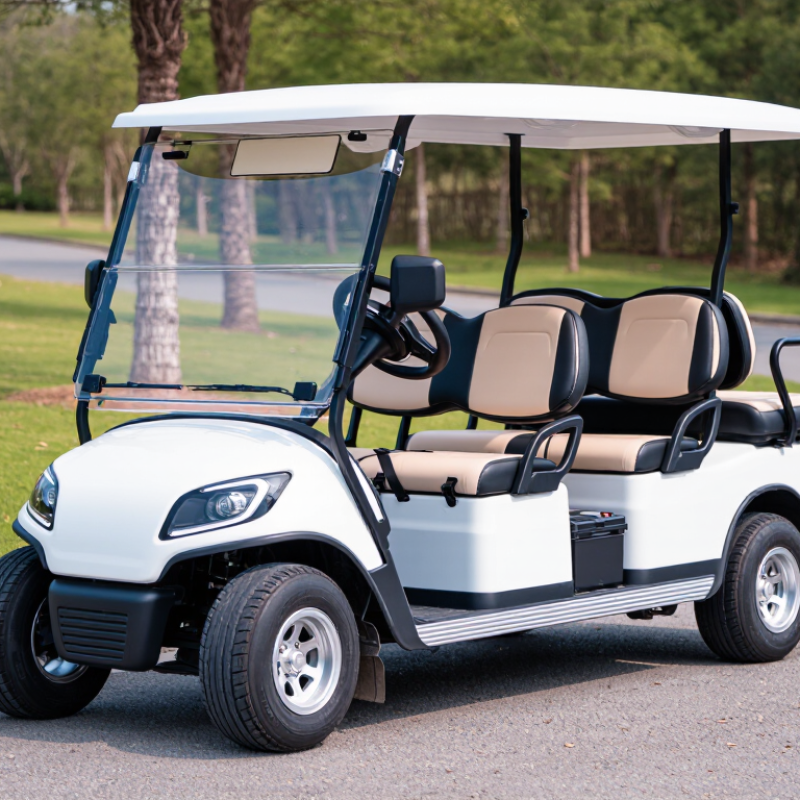
China Best Street Legal Golf Cart for Sale?
In the United States, a low-speed vehicle (LSV) is not simply a golf cart with lights. Federal rules define an LSV as a four-wheeled vehicle capable of speeds above 20 mph, but not above 25 mph, on a paved, level surface. Its gross vehicle weight rating must be under 3,000 pounds. That speed range matters. A cart limited to 20 mph may not meet the federal LSV definition, while one capable of more than 25 mph falls outside it.
An LSV must also meet applicable federal safety requirements, including equipment such as headlights, turn signals, mirrors, seat belts, and a windshield. Look for documentation showing the vehicle was manufactured to meet the relevant standards; added parts alone do not establish compliance. For an imported cart, ask the seller for its certification and vehicle identification details before paying. Paperwork can be easy to overlook.
Federal standards do not guarantee that every road permits LSV use. State and local rules may set road, registration, licensing, and insurance requirements. Check with the relevant motor vehicle authority before choosing a route or completing a purchase. A short drive near home may feel harmless, but road access depends on more than the cart’s speed.
| Topic | U.S. LSV Baseline | What Buyers Should Check |
|---|---|---|
| Vehicle classification | A low-speed vehicle (LSV) is a four-wheeled motor vehicle with a maximum speed capability of more than 20 mph and no more than 25 mph on a paved, level surface. | Confirm the vehicle is represented and certified as an LSV, rather than assuming an ordinary golf cart is street legal. |
| Maximum speed | Federal LSV standards set the speed range at over 20 mph and up to 25 mph. | Ask for documentation showing the vehicle’s tested or certified speed capability. A higher top speed does not make it a compliant LSV. |
| Gross vehicle weight rating | The federal LSV definition specifies a gross vehicle weight rating (GVWR) of less than 3,000 pounds. | Check the vehicle label and specifications for its GVWR; do not confuse GVWR with curb weight or passenger-and-cargo capacity. |
| Required lighting and reflectors | Federal LSV equipment requirements include headlamps, front and rear turn-signal lamps, tail lamps, stop lamps, and reflex reflectors. | Verify the required equipment is installed and functioning. State inspection rules may add requirements. |
| Other federal equipment | Federal requirements include a parking brake, rearview mirrors, seat belts, and a vehicle identification number (VIN). | Check that seat belts are provided for designated seating positions and that the VIN and certification information are present. |
| Road access | Federal LSV standards do not grant permission to drive on every road. State and local authorities regulate where LSVs may operate; many jurisdictions restrict them to roads with speed limits of 35 mph or less, subject to local rules and exceptions. | Check the laws and posted restrictions for the specific state, city, and route where the vehicle will be used. |
| Registration and driver requirements | Registration, title, driver licensing, insurance, and inspection requirements are generally determined by state law. | Confirm local requirements before purchase. Do not assume federal LSV compliance alone satisfies state registration or road-use rules. |
| Imported vehicles | A vehicle’s country of manufacture does not by itself establish U.S. road legality. Applicable federal safety standards and state requirements still matter. | Request the required U.S. compliance documentation and verify the VIN, certification label, equipment, and import paperwork before paying. |
| Practical purchase checklist | “Street legal” depends on both vehicle compliance and the rules where it will be driven. | Verify LSV classification, speed capability, GVWR, required equipment, VIN and certification documentation, warranty terms, parts availability, and local road access. |
It must have four wheels and reach more than 20 mph, but no more than 25 mph, on a paved, level surface. Its gross vehicle weight rating must be under 3,000 pounds. That range matters.
Check for headlights, turn signals, tail lamps, stop lamps, mirrors, a parking brake, windshield, seat belts, reflectors, and a vehicle identification number. Look for manufacturer compliance documents. Added lights alone prove little.
Ask for the vehicle’s certification documents and identification details before paying. Confirm that labels match the specific vehicle. Paperwork can be easy to overlook.
No. State and local rules may control road access, registration, licensing, and insurance. Check with the relevant motor vehicle authority before planning a route.
Make sure seat belts latch, mirrors provide a useful rear view, and the parking brake holds on a slight incline. A short drive can reveal practical issues.
Request a delivered-cost estimate covering freight, insurance, customs duties, port handling, and local delivery. Compare the final cost, not just the factory quote. Small charges add up.
Confirm who handles claims, whether labor and batteries are covered, and who pays return shipping. Get exclusions and terms in writing. Vague promises feel thin.
Ask for prices and delivery times for tires, brake components, controllers, and battery-related parts. Check whether routine items are available locally. I might be overcautious, but one small missing part can sideline a cart.
Choosing a Street Legal Golf Cart made in China starts with understanding what qualifies as a low-speed vehicle in the United States. These vehicles are generally designed for speeds in the 20–25 mph range, and buyers should check that a model includes the safety equipment required under FMVSS No. 500, such as lighting, mirrors, seat belts, and a windshield. Comparing carts by battery voltage alone is not enough: consider usable range, charging needs, passenger capacity, and payload to find a model that suits your daily routes.
Before purchasing, confirm the registration, insurance, and road-use requirements that apply in your state and locality, since rules can vary. Also estimate the full landed cost, including shipping, duties, and other import expenses, and ask how warranty claims are handled. Reliable access to replacement parts and qualified service can matter as much as the purchase price, helping you assess whether a cart will remain practical and supported over time.